
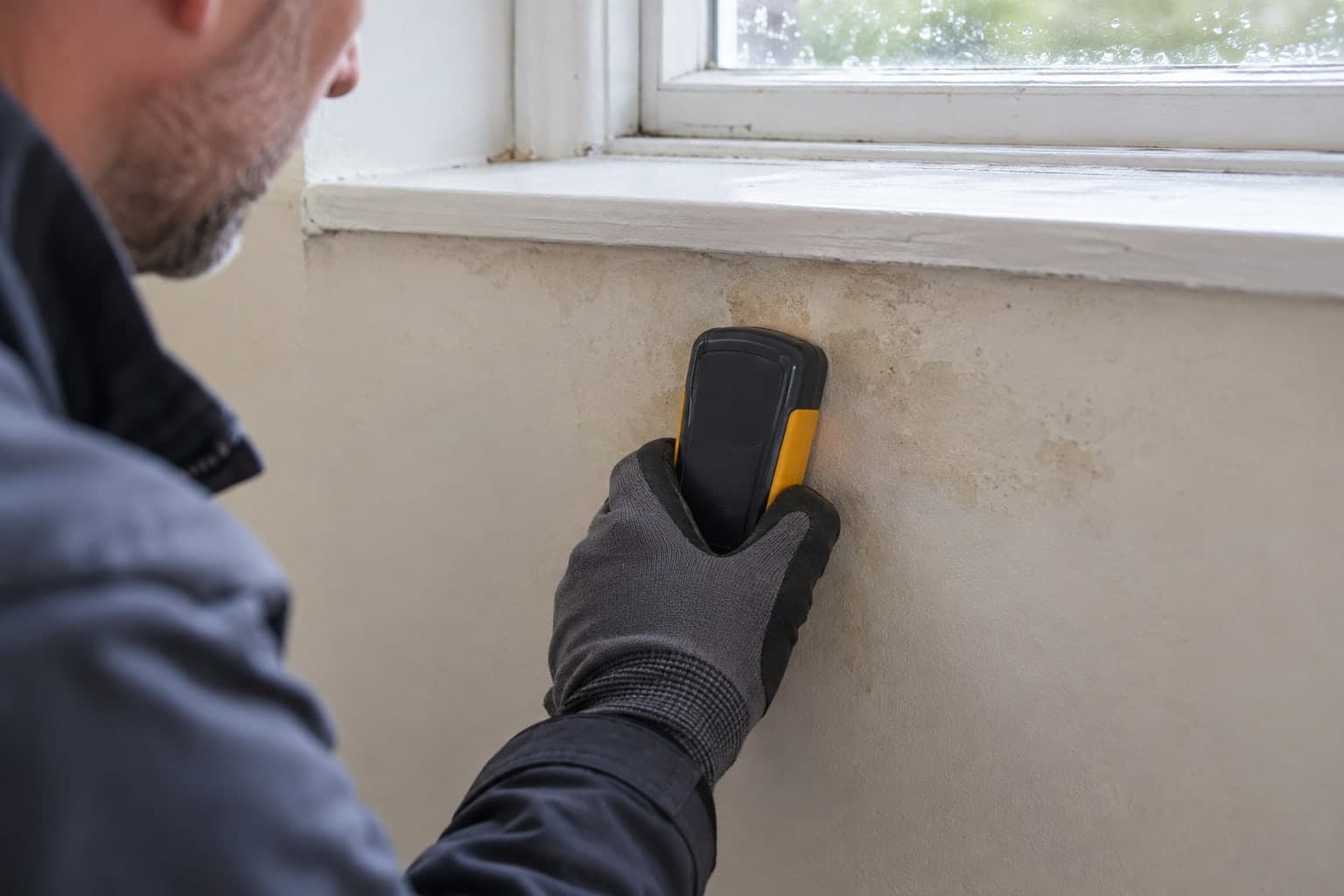
The cause of mould is almost always one of three things: condensation, damp, or a leak. Knowing which one you are dealing with is not a technicality - it determines who is responsible, what the fix actually involves, and whether the mould will come back after treatment. Wiping the surface and repainting without identifying the root cause is the single most common reason mould returns within weeks.
This guide gives you the practical signs to look for with each type, a checklist you can work through at the property, and a clear explanation of what each diagnosis means in terms of the repair. If you are a landlord or property manager dealing with a tenant mould complaint, getting this right also protects your legal position.
Why the cause matters before you treat it
Mould treatment - whether a professional fungicidal wash or a full surface preparation and re-render - deals with the growth that is there. It cannot address the moisture that is feeding it. Until the moisture source is found and removed, the mould will return. In some cases it comes back within a fortnight. Working through the key sources of mould growth in a property first is what makes a treatment hold.
The three main causes each have a different fix:
- Condensation - a ventilation or heating problem, usually addressed with extraction, trickle vents or improved insulation.
- Rising or penetrating damp - a structural issue with the damp-proof course, external masonry or roof, requiring specialist damp repair work.
- A leak - a plumbing or building defect that needs to be traced and repaired before any mould treatment begins.
Signs the mould is caused by condensation
Condensation is the most common cause of mould in residential rental properties. It happens when warm, moist air meets a cold surface - typically a wall, ceiling, or window - and the water vapour condenses into liquid. In properties with poor ventilation, inadequate heating or cold spots caused by poor insulation, condensation mould can develop quickly. The growth it produces also looks different from other types, which is worth knowing when you compare black mould against condensation mould.
- Mould appears on external walls, in corners and behind furniture - the coldest spots in the room.
- It is usually black or grey and has a soft, surface appearance rather than deep staining.
- There is condensation or water droplets on windows in the mornings.
- It is worst in bathrooms and kitchens, or rooms where heating is off and the door is kept shut.
- The underlying plaster is dry to the touch once the surface mould is wiped away.
- The problem appears or worsens in autumn and winter as external temperatures drop.
What to check for condensation
Check whether the extractor fans in the bathroom and kitchen actually work and vent to the outside - not into the loft space. Check whether windows can be opened for ventilation. Is there adequate heating in every habitable room? Cold walls combined with no means of ventilation create the conditions for condensation mould regardless of how tenants live.
Signs the mould is caused by damp
Damp in the building fabric is a different problem from condensation, though the two are frequently confused. There are two main types: rising damp and penetrating damp.
Rising damp
Rising damp occurs when groundwater travels upward through masonry via capillary action, usually because the damp-proof course has failed or was never installed. It is limited to the lower sections of walls - typically up to about one metre from the floor - and has distinctive signs:
- A visible tide mark or waterline on the lower wall, often with salt deposits and staining above it.
- Paint peeling or plaster bulging from the bottom up.
- A musty, earthy smell at the base of the wall.
- Plaster that feels damp even in dry weather.
- Skirting boards rotting from the bottom.
Penetrating damp
Penetrating damp is water entering from outside through a defect in the building fabric - a failing roof, cracked render, failed pointing, a leaking parapet wall, or a defective window or door frame. It is not limited to lower sections of the wall and tends to appear on external-facing surfaces at any height.
- Damp patches that appear after or during heavy rain.
- Staining or dampness on the internal face of an external wall, especially on upper floors.
- Patches on ceilings below a flat roof, parapet, or chimney.
- Areas that spread during wet weather and dry when conditions improve.
- Cold, wet plaster that stays damp even when condensation is not present.
Signs the mould is caused by a leak
A plumbing or structural leak can cause mould anywhere in a property, not just on external walls or in cold corners. Where the moisture source is a hidden pipe or a leak from the flat above, the mould appears wherever that water travels to - which is often in unexpected locations and difficult to trace without a proper investigation.
- Mould or damp staining appears suddenly on a ceiling or wall with no connection to rain or seasonal change.
- The affected area is directly below a bathroom, kitchen, or flat above.
- The ceiling plaster feels soft or spongy, or shows visible sagging.
- Water staining is yellowish or brown - common with slow leaks through floors and ceilings.
- The problem appeared or worsened after a period of heavy plumbing use above.
- A water meter check shows the supply is running when all taps are off.
How to trace a hidden leak
Hidden leaks often need thermal imaging or a moisture meter to pinpoint the source reliably. Cutting into a ceiling or wall without a clear diagnosis risks unnecessary damage and does not always find the problem. A professional inspection - starting at the most likely source above the wet area and working outward - is the most efficient method.
How professionals diagnose the cause of mould
When we attend a mould removal job, the diagnosis comes before any treatment. The steps we follow are roughly:
- A moisture meter reading on the walls and ceiling to identify where moisture levels are elevated and where they are not.
- Checking weather correlation - is the damp worst after rain or in sustained wet periods?
- Checking seasonal correlation - does the problem appear or worsen in cold months?
- Inspecting the building fabric - roof, gutters, pointing, render, window seals and the damp-proof course.
- Checking ventilation and extraction - working fans, trickle vents, window openers and air bricks.
- Checking plumbing above and adjacent to the affected area for signs of dripping, seeping or intermittent leaks.
Once the cause is clear, the repair scope is clear too. A mould treatment carried out without this diagnostic step is incomplete. We explain what we have found to the landlord or managing agent before any work starts, so the decision on what to repair is made with full information.
Why getting the diagnosis right matters
Getting the diagnosis wrong - or skipping it - has real consequences. Treating surface mould from a hidden leak as if it were condensation means the mould will return once the fungicidal treatment wears off, the ceiling may eventually fail, and the landlord has spent money twice without solving the problem.
It also affects who is legally responsible for the mould. Where a tenant reports mould and a landlord arranges a surface treatment but the mould returns within weeks because the underlying cause was not addressed, that creates a paper trail that a disrepair claim will use. The cleaner outcome is a clear diagnosis, the underlying repair, and a mould treatment that deals with both the cause and the surface at the same time.
Simpled Services has completed over 8,500 jobs for landlords, letting agents, housing associations and councils across London and the South of England. Our mould removal work comes with a 12-month guarantee - and because we treat the source as well as the mould itself, the job does not need to be repeated.
If you need a hand, Simpled Services can help. Call us on 020 4571 7367, message us on WhatsApp at the same number (020 4571 7367), or email hello@simpledservices.co.uk and we will take it from there.