
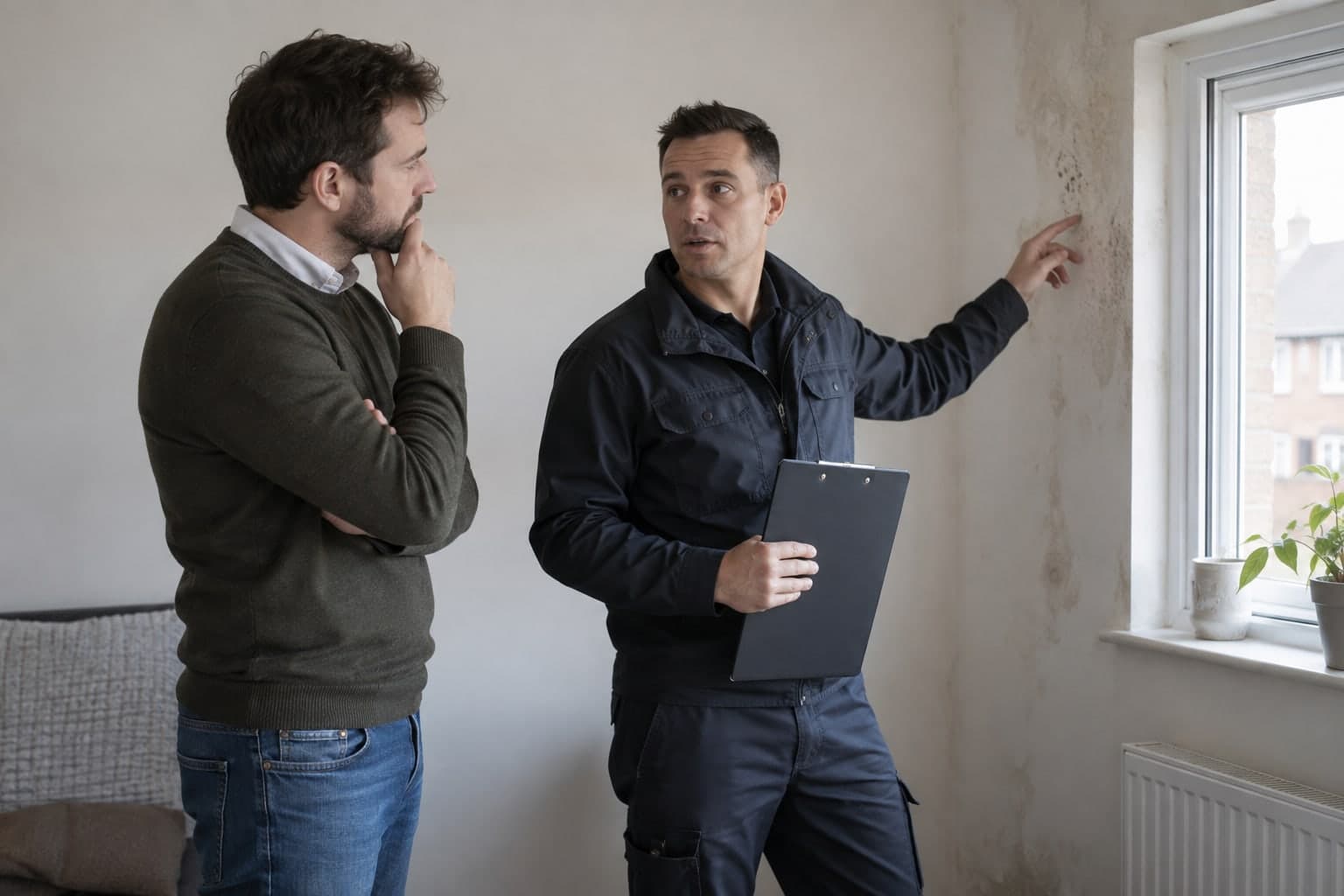
In most cases, yes - a landlord is responsible for mould in a rented property. If the mould is caused by damp, a leak, disrepair, or a home that cannot be kept warm and properly ventilated, the law puts the duty to fix it firmly on the landlord. The tenant is only on the hook in the narrower situation where mould is purely down to how they live in the property, and even then a landlord cannot simply ignore it.
That is the short answer. Because mould is now one of the most common reasons landlords end up in a disrepair claim or in front of the council, it is worth understanding exactly where the line sits and what you are expected to do.
The short answer: when is the landlord responsible?
A landlord is responsible for mould whenever it is linked to the condition of the building rather than purely the tenant's behaviour. In practice that covers the vast majority of mould cases, because most mould is driven by moisture the tenant cannot control - usually one of the common sources of mould growth in the building itself.
- Penetrating damp - a roof, gutter, window or wall letting water in.
- Rising damp - a failed or missing damp-proof course.
- Leaks - plumbing, radiators, or a leak from the flat above.
- Condensation caused by the building - cold spots, no extractor fans, windows that do not open, or heating that is inadequate or too expensive to run.
- Poor or blocked ventilation that the tenant has no way to fix.
If any of these are behind the mould, it is the landlord's job to investigate and put it right. The legal duty to keep the structure and the heating, plumbing and ventilation in working order sits with the landlord, and you cannot pass it to the tenant through a tenancy clause.
What the law actually says
Several overlapping rules make mould a landlord responsibility. You do not need to be a lawyer, but you should know the names that come up when a tenant, a council or a solicitor gets in touch.
Repairing obligations (Section 11)
Under the Landlord and Tenant Act 1985, landlords must keep the structure and exterior of a property in repair, along with the installations for water, heating and sanitation. Where mould is caused by a defect like a leak, a failed roof or broken heating, fixing it falls under this repairing duty.
Fitness for human habitation
A rented home must be fit to live in for the whole tenancy. Serious damp and mould can make a property unfit, which gives the tenant a direct route to ask a court to order the works and award compensation. The Housing Health and Safety Rating System (HHSRS) treats damp and mould as a hazard that councils can act on.
Awaab's Law and the Renters' Rights Act
Awaab's Law sets strict timescales for social landlords to investigate and fix damp and mould once a tenant reports it, and it widens to more hazard types in social housing from 30 November 2026. The government has committed to extending it to private landlords under the Renters' Rights Act 2025, but that sits in phase 3 of its implementation roadmap, subject to consultation, with no confirmed date. The Act has already strengthened tenants' position in other ways: Section 21 no-fault evictions ended on 1 May 2026, and a Private Rented Sector Landlord Ombudsman able to order landlords to act is expected to become compulsory in 2028.
The detail of the timescales and dates is being phased in, so check the current position before you rely on a specific deadline. The direction of travel is clear though: report a mould problem and you are expected to move quickly.
When is mould the tenant's responsibility?
There is a narrow band where mould is genuinely the tenant's doing - for example, never opening a window, drying large amounts of washing on radiators with the heating off and vents taped over, or blocking the extractor fans. Even here, the landlord cannot simply blame lifestyle and walk away.
Councils and courts have become sceptical of the "it's just condensation from the tenant's lifestyle" defence. If the property has cold, poorly insulated walls, no working extraction and windows that do not open, the moisture has nowhere to go and the responsibility shifts back to the landlord. The safe approach is to investigate the real cause rather than assume it is the tenant.
What a landlord should do when mould is reported
Acting quickly protects your tenant's health and your own position if a claim ever follows. A sensible order of events looks like this:
- Respond in writing promptly and arrange to inspect - do not let it sit.
- Find the cause, not just the patch. Check for leaks, damp, cold spots and whether the property can actually be ventilated.
- Treat the mould properly and fix the underlying moisture source, so it does not simply grow back.
- Improve ventilation and insulation where the building is the problem - extractor fans, trickle vents, positive input ventilation.
- Keep records - dates reported, what you found, what you did. Good records are your best defence against a disrepair claim.
Painting over mould or wiping it with bleach and hoping is the most common mistake. It hides the problem for a few weeks and then it returns, usually worse, and now there is a paper trail showing you did not deal with it.
Why treating the cause matters
Mould is a symptom. Unless the moisture behind it is dealt with, it comes back - which is exactly why our mould removal service treats the source, not just the surface, and stands behind the work with a 12-month guarantee. Left alone it is more than unsightly: it carries real health risks for tenants and, over time, structural damage and lost property value. We work with housing associations, councils, letting agents and private landlords across London and the South of England as a Constructionline Gold accredited contractor, so we deal with reported mould cases every week and know how to evidence the work for compliance.
This article is general guidance, not legal advice. If you are facing a formal disrepair claim or enforcement notice, take proper legal advice on your specific case.
If you need a hand, Simpled Services can help. Call us on 020 4571 7367, message us on WhatsApp at the same number (020 4571 7367), or email hello@simpledservices.co.uk and we will take it from there.