
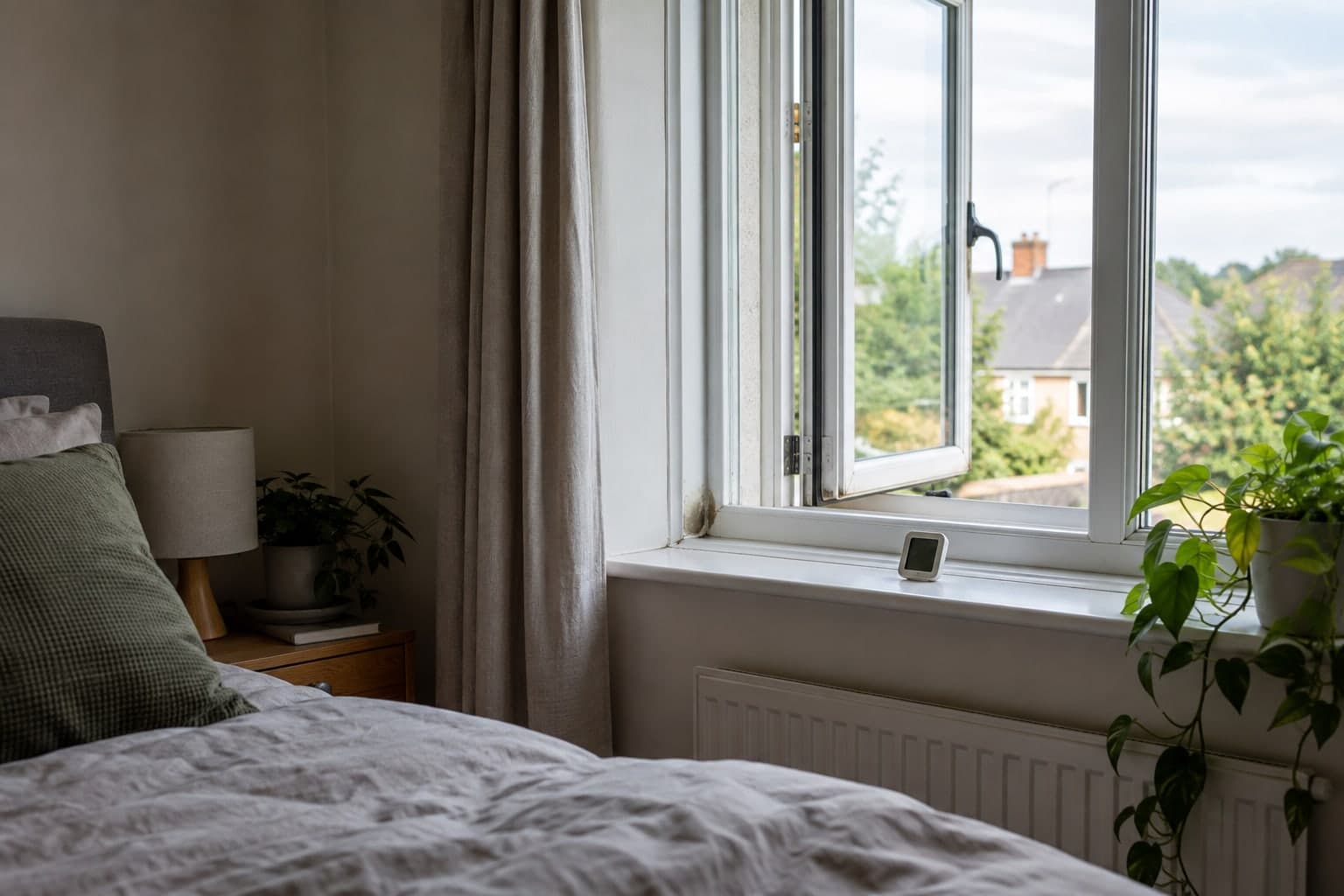
Mould exposure can cause or worsen respiratory problems such as asthma and bronchitis, trigger allergic reactions and skin conditions, and in some cases affect mental wellbeing - risks confirmed by both the NHS and UK government health guidance. This article covers the health risks in detail: the symptoms to watch for, who is most vulnerable, when to see a doctor, and what the law requires a landlord to do about it.
Keep reading to protect your family's well-being.
Key takeaways
- Mould in homes can cause serious health problems like asthma, allergies, and even mental distress.
- Common mould spots include bathrooms, kitchens, basements, lofts, windowsills, utility rooms, and behind furniture.
- Prevent mould by controlling moisture. Use fans and open windows for good airflow.
- Landlords must fix mould complaints quickly under "Awaab's Law", inspired by Awaab Ishak's death from mould exposure in December 2020.
What is mould and how does it grow in homes?
Mould is a type of fungus that thrives in damp areas. The most common sources of mould growth are condensation, leaks and poor ventilation, and once it takes hold it can grow quickly and spread on walls, ceilings, and other surfaces in your home.
Causes of mould growth indoors
Mould can grow indoors for various reasons. It thrives in damp places with warm temperatures and high humidity.
- Poor insulation: older homes with poor insulation are more likely to have mould.
- High humidity: homes with high humidity levels create a perfect place for mould to grow.
- Condensation: condensation on windows, walls, and pipes can lead to mould growth.
- Dampness: water leaks from roofs or plumbing can cause damp spots where mould thrives.
- Showering and cooking: both create steam that increases indoor moisture.
- Drying clothes indoors: this adds extra moisture to the air, which fosters mould growth.
- Poor ventilation: lack of proper ventilation traps moisture indoors, aiding mould formation.
- Energy efficiency improvements: some energy-efficient buildings may trap more moisture, increasing the risk of mould.
Common areas for mould development
Mould loves damp and humid places in homes. It can grow quickly if not managed.
- Bathrooms: the high humidity from showers makes them a hot spot, and poor ventilation adds to the problem.
- Kitchens: steam from cooking and washing up creates moisture; lack of proper airflow increases risks.
- Basements: these areas often have poor air circulation and can be very damp.
- Lofts: poor insulation leads to condensation which, combined with low ventilation, helps mould thrive.
- Windowsills: condensation collects on cold surfaces like glass; regular cleaning is needed to prevent growth.
- Utility rooms: high humidity from tumble dryers and washing machines increases mould risk.
- Behind furniture: mould can hide behind sofas and wardrobes placed against walls, especially exterior ones.
Health risks associated with mould exposure
Mould in your home can cause serious health problems. It affects breathing and skin, and can impact mental well-being.
The risks below apply to mould generally, whatever the colour or species. If the mould you are dealing with is black or dark-coloured specifically, our dedicated guide to whether black mould is dangerous to your health goes into the species-specific detail, including why black mould in a bedroom is particularly high-risk.
Respiratory problems
Exposure to damp and mould can cause or worsen respiratory problems. Mould spores are a common trigger for asthma, especially in children. Poor indoor air quality also links to upper respiratory tract infections, bronchitis, and allergies.
Damp environments may increase the risk of allergic rhinitis, a condition that affects your nose and causes sneezing or a blocked nose. Studies show that people living with mould have more respiratory symptoms like coughing and wheezing.
Skin conditions
Mould exposure can lead to many skin conditions. Common issues include allergic dermatitis, skin irritation, and eczema. You may notice dry, red, cracked skin or even hives after coming into contact with mould. Those with existing eczema are at a higher risk of worse rashes from mould exposure.
People facing chronic fungal exposure might experience lasting skin inflammation and sensitivity problems. Pregnant women and those already dealing with skin issues are particularly vulnerable, so proper precautions should be taken to avoid these health risks.
Mould and mental health
Exposure to mould can also harm your mental health. It is linked to higher stress, anxiety, and depression levels. Studies show that 87.5% of univariate analyses and 76.5% of multivariate analyses found a strong connection between mould exposure and poor mental health outcomes.
Poor housing conditions like dampness add to mental distress. Mould affects indoor air quality and makes homes feel unhealthy. Improving housing by tackling dampness and mould can boost emotional wellbeing and overall quality of life.
When to see a doctor
Government health guidance, produced jointly by health and housing departments, is direct on this point: anyone concerned about symptoms they think are linked to damp or mould should speak to a healthcare professional. Worth raising with a GP: a persistent cough, wheezing or shortness of breath, recurring chest or sinus infections, itchy or watery eyes, and skin rashes, patches or eczema that flare up or will not clear. Anyone with a weakened immune system should also stay alert to fungal infections.
The same guidance makes a point that matters just as much for landlords: action to fix damp and mould should never wait for a doctor's letter or medical evidence. A tenant does not need to prove a health problem before a landlord investigates and fixes the cause - significant damp and mould is reason enough to act on its own.
For anything urgent, call NHS 111 or see a GP. For a medical emergency, call 999.
What the NHS says about damp and mould
If you want a neutral read on this rather than a contractor's, the NHS is the place to start. Its position is that people living with damp and mould are more likely to have respiratory problems, respiratory infections, allergies and asthma, and that damp and mould can also affect the immune system. The NHS also lists sore eyes, eczema and fungal skin infections among the effects, and notes that damp and mould can affect mental health too.
On cause, the NHS is equally direct: condensation is the most common cause of damp in UK homes. Condensation forms when warm, moist air from showering, cooking and drying washing indoors meets a cold surface - a window, a north-facing external wall, the cold spot behind a wardrobe - and the moisture the air was carrying is deposited there. Poor ventilation is what lets that moisture build up instead of leaving the building. That is why the three things that keep coming up together are condensation, poor ventilation and cold surfaces, and why treating the mould without treating those is a temporary fix. If you are not sure which of the three you are dealing with, our guide to telling condensation, damp and a leak apart walks through the signs.
Full NHS guidance is at nhs.uk on damp and mould and your health. If you or someone in the household is unwell and you think mould is the reason, speak to a GP or call 111 - we treat buildings, not people.
Who is most at risk
Mould does not affect everyone in a household equally. The NHS identifies babies, children and pregnant women as most at risk, and babies and children are more vulnerable because they have smaller airways. Also particularly sensitive are older people, anyone with an existing skin condition such as atopic eczema, anyone with a respiratory condition such as asthma or an allergy, and anyone with a weakened immune system, including people having chemotherapy.
Government guidance adds a few more groups worth flagging: anyone with an existing cardiovascular condition, recent mothers, and anyone who is bedbound, housebound or has reduced mobility, since they typically spend more hours exposed to the air in the same room. Mental health is on the list too - living with damp and mould is linked to anxiety and distress, on top of the physical symptoms.
That risk profile is the practical reason the law treats a mould report in an occupied home as urgent rather than cosmetic. If a property you own or manage has mould and a baby, a child, an older resident or someone with asthma living in it, it should go to the front of the queue.
Preventative measures to reduce mould in the home
Controlling condensation
Dry windows and sills each morning to reduce moisture. Keep kitchen and bathroom surfaces dry. Avoid drying clothes indoors, and use exhaust fans if you have them.
A family of four in a three-bedroom home can add 112 pints of moisture each week. This extra dampness must be managed to stop mould from growing. Use dehumidifiers or open windows for better air circulation.
Proper ventilation strategies
Proper ventilation reduces moisture and prevents mould. Open windows daily to improve air flow. Use extractor fans in bathrooms and kitchens where steam is common.
Control the humidity inside your home by using dehumidifiers, especially in damp seasons. Keep your home's humidity level below 60%. Check for condensation on windows as a sign of poor ventilation, and get rid of musty smells by letting fresh air circulate every day.
Legal rights and responsibilities
Tenants and landlords have specific rules about mould. These laws help protect health and property.
Mould, health and safety, and where UK law sits
In England and Wales, damp and mould is not treated as a decorating problem. It is a rated housing health and safety hazard. Under the Housing Health and Safety Rating System (HHSRS), which sits under the Housing Act 2004, a council environmental health officer scores hazards in a property. Damp and mould growth is one of the 29 rated hazards, and where the score puts it in Category 1 the local authority has a duty to act - which can mean an improvement notice, a prohibition order or, in the worst cases, emergency remedial action carried out and charged back to the landlord.
Two more duties sit alongside it. The Homes (Fitness for Human Habitation) Act 2018 requires rented homes to be fit to live in at the start of and throughout a tenancy, and freedom from damp and mould is explicitly part of that test - a tenant can take a landlord to court directly under it. And the Decent Homes Standard sets the quality floor for social housing stock.
The most demanding duty is Awaab's Law, in force for social landlords since 27 October 2025, which puts fixed deadlines on the response to a damp and mould report - and its Phase 2 expansion on 30 November 2026 widens the same regime to a much larger set of hazards. We cover the timescales in detail in our guide to Awaab's Law and mould for landlords, and what it means for the private rented sector in Awaab's Law and private landlords. For the wider picture of what a landlord owes on damp, see mould in a rental property and a landlord's legal duties.
Tenant rights regarding mould
Tenants have the right to live in a safe home without mould. If your landlord does not fix dampness and mould, you can take legal action. The Decent Homes Standard ensures social housing providers keep properties at a high quality, and Environmental Health Officers can inspect your property for damp and mould if needed.
The Environmental Protection Act 1990 addresses nuisances like dampness and mould. You can call local authorities to check these problems. They make sure landlords follow health rules, keeping homes safe for tenants.
Landlord obligations under "Awaab's Law"
Landlords must investigate significant mould hazards within 10 working days of being told about them. Tenants must get a written summary of the findings within 3 working days of the investigation, works on significant hazards must start within 5 working days, and emergency hazards need to be made safe within 24 hours. These rules protect tenants' health and safety.
"Awaab's Law" was inspired by Awaab Ishak, who died from mould exposure in December 2020. The law ensures landlords fix mould problems quickly and helps stop health issues from long-term mould exposure.
Conclusion
Mould in your home can be more than just an eyesore. It poses serious health risks including respiratory issues, allergies, and asthma. Left untreated it can also damage the property and knock down its value, so it pays to act swiftly. If you rent your home, remember that your landlord is usually responsible for fixing mould caused by damp or disrepair.
Simpled Services is here to help keep your home safe and healthy from mould-related dangers. Our mould removal team treats the moisture source as well as the visible mould, backed by a 12-month guarantee. Stay vigilant and act fast against this hidden threat. If you need a hand, Simpled Services can help. Call us on 020 4571 7367, message us on WhatsApp at the same number (020 4571 7367), or email hello@simpledservices.co.uk and we will take it from there.