
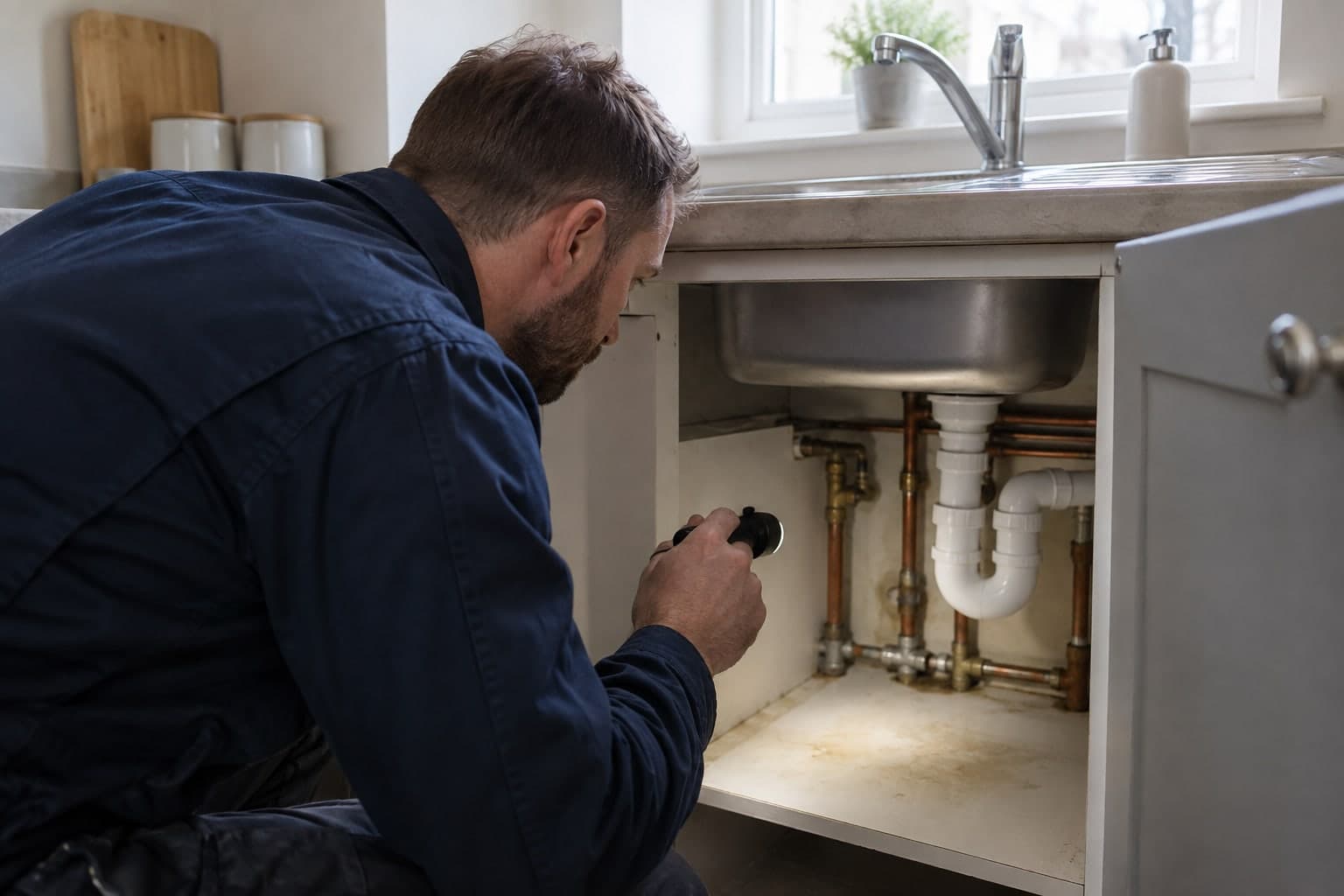
Mould is a symptom. The patch you can see is where spores found a surface that stays damp, and the useful question is where that dampness is coming from - because it is often not in the same place, or even the same room. This guide is about tracing it: what to look at in each room, which signs separate condensation from a leak or structural damp, and what to do once you have found it.
If you want the underlying explanation rather than the diagnosis, our companion guide to what causes mould in a house sets out each cause in full and the fix that goes with it.
Key takeaways
- High moisture causes mould: humidity above 60% can lead to mould. Kitchens and bathrooms are at risk due to steam from cooking and showers.
- Poor ventilation traps dampness: bad airflow helps mould grow. Open windows and use fans to reduce moisture in the air.
- Leaky pipes and roofs add to issues: water from leaks causes damp spots, leading to mould. Check for water stains on walls and ceilings often.
- Health risks are serious: mould can cause asthma, infections, stress, or depression. Children and older people are more at risk.
- Action steps help prevent mould: fix leaks quickly, clean affected areas with proper products, and use ventilation systems properly.
Understanding mould and its common types
Mould is a type of fungus that grows in damp areas. Common indoor mould types include black mould, which can be a health risk.
What is black mould?
Black mould is a type of fungus with spores that spread in damp and warm places. Common types are Cladosporium, Alternaria, and Stachybotrys chartarum.
Stachybotrys can release harmful toxins into the air. These toxins might cause sneezing, runny nose, red eyes, or skin rashes. Black mould often grows on tiles, fabrics, carpets and wood if moisture is present. Not every dark patch is the same problem - see our guide on telling black mould and condensation mould apart to work out which you're dealing with.
Where does mould typically grow in homes?
Mould often grows in damp and warm areas. It thrives in places with high humidity, like bathrooms and kitchens. Leaking pipes and roofs can also create ideal spots for mould growth.
Condensation on windows and walls provides moisture that mould loves. Poor ventilation makes this worse by trapping humidity inside. Bedrooms are also at risk, especially if airflow is blocked or there's too much moisture from daily activities.
Key sources of mould growth
In UK homes, mould growth almost always traces back to one of five things: excess indoor humidity, poor ventilation, a leak, rising or penetrating damp, or everyday habits that add moisture faster than the room can shed it. Each needs a different fix - our guide to what causes mould in a house breaks all of them down in full, and if you are not sure which one you are looking at, condensation, damp or a leak: how to find the true cause walks through the practical checks.
Excessive indoor humidity
Too much indoor humidity often causes mould to grow. High moisture levels in the air create great conditions for fungal spores to thrive. This can lead to poor indoor air quality and health problems, like breathing issues.
Watching for dampness and controlling moisture are key steps in stopping mould from growing.
Poor ventilation
Poor ventilation can cause dampness and mould. Moisture builds up when air cannot flow well, creating the perfect spot for mould to grow.
High indoor humidity often happens due to poor airflow. Good ventilation helps reduce indoor humidity levels, lowering the chance of mould problems.
Leaking pipes and roofs
Leaking pipes and roofs are main causes of mould growth. Water from these leaks seeps into walls, ceilings, and floors, leading to dampness and mould buildup. Penetrating damp results when water enters through roof or pipe leaks.
Signs include water stains, damaged plaster, and localised damp spots. Rotting wood can also occur due to this moisture build-up. An average family generates around 20 pints (11.4 litres) of moisture daily in unventilated homes, which adds to the problem. Routine checks for leaks are essential to prevent mould growth.
Rising and penetrating damp
Not every damp source is a leak. Rising damp happens when ground moisture travels up through a wall because the damp-proof course has failed or was never fitted - it is most common in older properties and usually shows as a tide mark low on internal walls, often with crumbling plaster or a white salty residue. Penetrating damp is different again: it comes in horizontally through the building fabric itself, through cracked render, faulty pointing, a blocked gutter overflowing down a wall, or a poorly sealed window reveal, rather than from a specific pipe or appliance.
Both are structural issues rather than a ventilation problem, so improving airflow will not fix them - the fault in the fabric has to be found and repaired first, which is usually a job for a damp specialist rather than a mould treatment on its own.
Condensation in kitchens and bathrooms
Moisture from cooking and hot showers often causes condensation in kitchens and bathrooms. High humidity levels, over 70%, can lead to damp conditions. This creates a perfect environment for mould growth, and lack of good ventilation makes the problem worse.
Simpled Services tackles these issues promptly. We help manage indoor humidity and improve air flow. Routine checks for leaks and moisture are important too.
Everyday habits and airflow problems
A surprising amount of household mould comes from habits rather than a building fault. Drying laundry on radiators or an indoor airer releases several litres of water into a room with nowhere to go if there is no extraction or open window - it is one of the most common causes of mould on bedroom walls and behind curtains. Furniture pushed up against an external wall, especially a wardrobe or bed head in a solid-wall or poorly insulated property, blocks airflow and creates a cold spot where condensation forms out of sight, so mould often appears first on the wall behind rather than anywhere visible in the room.
Blocked or painted-over trickle vents, and extractor fans that are switched off, covered, or never used, have the same effect: the moisture a home naturally produces has no way out. Leaving a gap of a few centimetres between furniture and external walls, using extraction whenever cooking or showering, and drying laundry with a window cracked open or a vented dryer all reduce the moisture load without any building work.
Health risks associated with mould exposure
Respiratory effects
Exposure to mould can harm lung health. It often leads to respiratory illnesses like asthma and infections. Damp conditions make it easier for mould to grow, affecting indoor air quality - we cover the full health risks of mould in your home in a separate guide.
About 18% to 50% of buildings have damp issues. In 2019 alone, English homes with damp or mould caused around 5,000 new asthma cases and 8,500 lower respiratory infections. Children are at higher risk for severe symptoms from these conditions.
Mental health effects
People exposed to mould may face mental health problems. Studies show that 87.5% of cases link mould exposure to issues like stress, anxiety, and depression.
Damp homes can lead to feelings of fear and frustration. Those living with mould often feel unhappy. This impact on mood shows the need for quick action against mould.
Increased risk for certain groups
Certain groups face higher risks from mould exposure, including people with asthma, children, and older adults. A study found a 30-50% increased risk of developing asthma due to dampness and mould.
Homes with mildew smells or visible water damage also raise the odds of health issues like eczema. Vulnerable groups should stay alert to signs of mould in their environment.
Identifying signs of mould in your home
Check for dark spots on walls and ceilings. Notice musty smells in rooms or around windows.
Mould on walls and ceilings
Mould on walls and ceilings is common in damp homes. These spots are often seen as black, green, or white patches that grow in moist areas with poor ventilation.
High indoor humidity helps mould grow fast. Leaks from pipes or roofs also cause mould to spread. The musty smell of mildew can be a sign of hidden mould - check for water damage or moisture marks on walls and ceilings to spot it early.
Mould in kitchens and bathrooms
Kitchens and bathrooms often have high moisture levels. Frequent showers, sinks, and cooking all contribute. Excessive indoor humidity over 70% can cause mould growth in these areas.
Poor ventilation also plays a big role. Without proper airflow, dampness stays longer on surfaces like walls and ceilings. Look for signs such as mildew around sinks or black spots in grout lines. If you notice a musty odour, it is time to check for hidden mould too. When it comes to the clean-up itself, our guide to how to remove mould from bathroom ceilings and silicone covers the method step by step.
Mould on windows and in bedrooms
Visible mould and a musty smell on windows or in bedrooms show dampness. High moisture levels above 75% relative humidity help this growth. Mould like Stachybotrys chartarum grows well at around 93% humidity.
Common symptoms from mould exposure include breathing problems, headaches, and eye irritation. Be aware of these signs to keep your home safe and healthy.
Other signs of mould growth
Walls and ceilings may have visible mould spots, often appearing as black or green patches. A musty smell can signal hidden mould, and mould can also be found on clothes in wardrobes.
Health symptoms like headaches, eye irritation, and nasal congestion are common in damp homes. If you notice these signs, there might be mould growth.
Preventative measures to control mould
Improving home ventilation
Good ventilation keeps your home fresh and mould-free. Open windows to let fresh air in and reduce moisture. Use extractor fans in kitchens and bathrooms to pull out steam, and ensure vents are not blocked by furniture or curtains.
Heating and ventilation systems need regular maintenance to work well. Clean filters often to prevent mould spores from spreading through the house, and aim to dry wet areas - like after a spill or leak - within 24-48 hours.
Managing indoor humidity
Keep your indoor humidity below 60% to prevent mould. Use a thermo-hygrometer to check the relative humidity and temperature in rooms. Proper heating and airing also help control moisture levels, and leaks should be fixed quickly as they raise indoor humidity.
Good design is key for managing rainwater and groundwater. Ensure gutters are clear so water does not enter your home, and keep materials that absorb moisture dry to stop mould growth.
Routine checks for leaks and condensation
Regular checks for leaks and condensation are key to mould prevention. Inspect pipes, roofs, and walls often. Address wet areas quickly to stop moisture build-up, and use moisture meters during inspections to find hidden damp spots.
Quickly dry wet materials to lower the risk of mould growth, and clean surfaces prone to dampness with mould-resistant products.
Effective strategies for removing mould
To tackle mould, start by cleaning any affected areas with specialised products, then ensure you dry the areas completely to prevent mould from returning. If it keeps coming back despite this, or covers a large area, our mould removal team treats the moisture source as well as the mould itself, backed by a 12-month guarantee. For what a professional job typically costs, see our guide to the real cost of removing mould from a property.
How to remove black mould from walls
Black mould on walls can harm your health and damage your home. Use these steps to remove it safely:
- Preparation: wear gloves, mask, and goggles for protection. Cover nearby furniture with plastic sheets.
- Cleaning solution: mix a mould wash concentrate as per the product instructions. Avoid using bleach alone - it does not kill mould roots.
- Scrubbing: dip a brush in the solution and scrub the affected areas, focusing on corners, cracks, and crevices where mould hides.
- Rinsing: wipe the wall with a damp cloth after scrubbing and rinse well to remove residue.
- Drying: dry the cleaned area thoroughly using a fan or open windows. Ensure no moisture remains, as this can cause regrowth.
- Prevention: inspect for hidden leaks with moisture meters and fix issues like leaking pipes or condensation spots.
- Sealing and painting: use fungicidal paint once the wall is dry to help prevent future mould growth.
Addressing mould in showers and on grout
Addressing mould in showers and on grout is crucial to keep your bathroom healthy:
- Control humidity: keep the bathroom humidity below 50%; use a hygrometer to measure moisture levels.
- Improve ventilation: turn on extractor fans and open windows during and after showers.
- Clean regularly: scrub grout and sealant weekly.
- Fix leaks promptly: check pipes, taps, and showerheads and repair issues immediately.
- Use mould-resistant products: apply mould-resistant sealants on grout lines.
- Dry surfaces after use: wipe down shower walls and doors with a dry cloth after each use.
- Inspect sealant often: look for cracks or gaps in sealant around baths and showers, and reseal damaged areas.
Legal standards and responsibilities in rented properties
Landlords must ensure rental properties are free from mould. They should fix any leaks and improve ventilation to prevent mould growth.
Housing Act and Environmental Protection standards
The Housing Act states that rented homes must be fit to live in - which means no damp or mould. Landlords must fix these issues if tenants report them. According to the Environmental Protection Act 1990, damp and mould are seen as statutory nuisances, and tenants can take legal action if landlords do not address them.
Tenants should ventilate and heat their homes to help prevent mould growth, but landlords must handle bigger issues like leaks or roof damage causing dampness. They are legally required to make sure properties meet habitability criteria set by housing regulations for indoor air quality and environmental health standards.
Awaab's Law and the Renters' Rights Act 2025
The rules tightened sharply in late 2025. Awaab's Law came into force for the social rented sector on 27 October 2025 and sets fixed timescales for damp and mould. Once a social landlord is told about a potential damp or mould hazard, they must investigate within 10 working days, give the tenant a written summary of the findings within 3 working days of that investigation, and make the property safe within set timeframes where the hazard is a significant risk to health. Genuine emergencies must be made safe within 24 hours. Through 2026 the same duty is being extended to a wider range of hazards.
The Renters' Rights Act 2025 carries this into private renting. Awaab's Law is expected to apply to private landlords from 2027, with the exact date still subject to consultation, a Decent Homes Standard is due to cover both sectors from 2035, and privately rented homes will need to reach EPC C by 1 October 2030. These dates are phasing in, so check the current position before relying on a specific deadline - but the direction is clear: report damp or mould and the law now expects landlords to act quickly.
Landlord responsibilities for mould prevention
Landlords must stop mould growth and keep properties free of mould. Under the Housing Health and Safety Rating System (HHSRS), landlords need to meet certain standards for housing conditions, including stopping mould.
Local authorities can issue improvement notices if a landlord ignores mould issues. Landlords should inspect their properties often to find sources of moisture, and act fast when tenants report any mould problems. For where the legal line sits, see our guide on whether a landlord is responsible for mould, and on what happens when mould is left untreated.
If you need a hand, Simpled Services can help. Call us on 020 4571 7367, message us on WhatsApp at the same number (020 4571 7367), or email hello@simpledservices.co.uk and we will take it from there.