
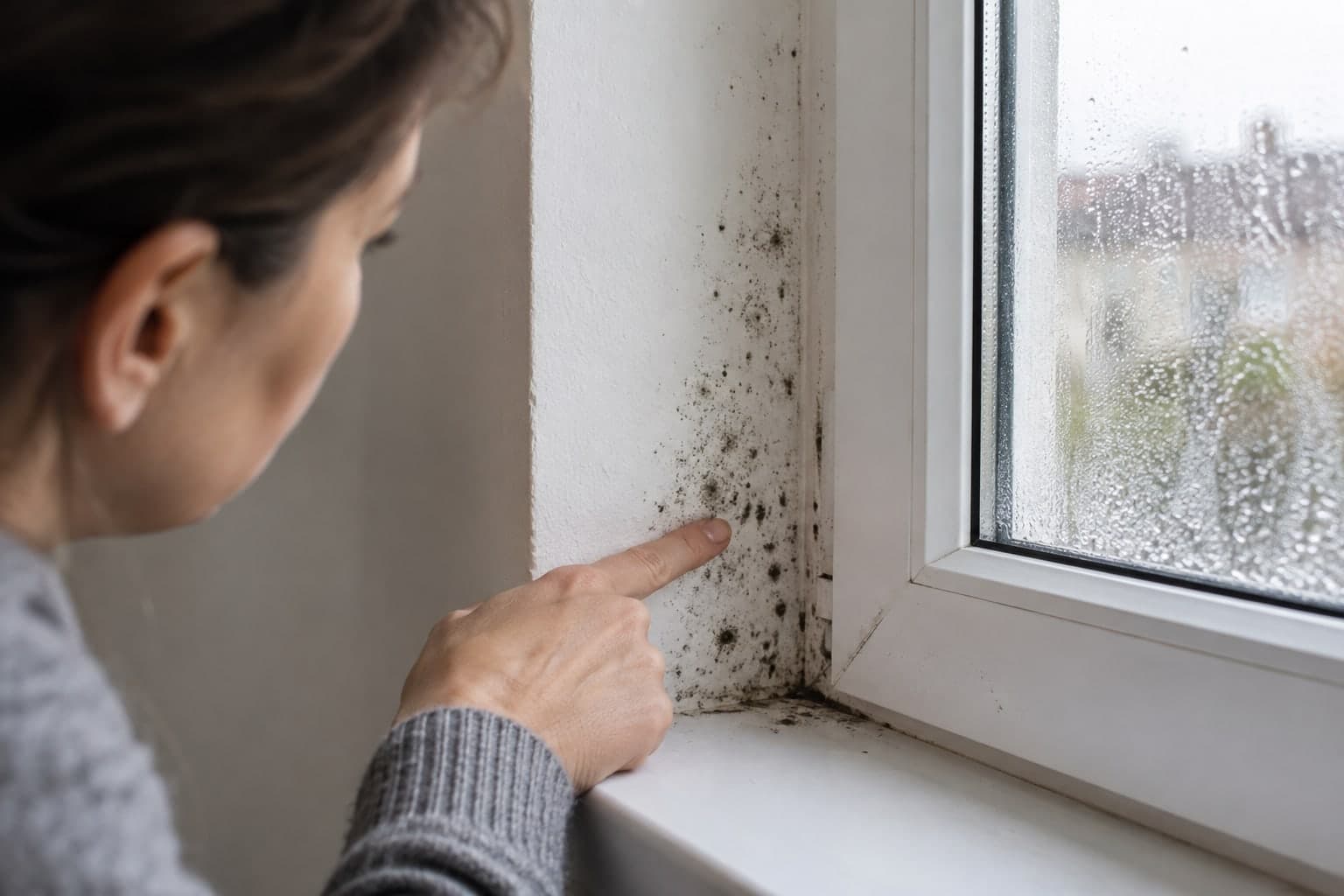
The phrase 'black mould' gets used for almost every dark patch on a wall or ceiling, but not all of it is the same problem. Condensation mould - the kind that grows where warm, moist air meets a cold surface - looks almost identical to mould caused by a leak, penetrating damp, or a structural fault. The difference matters enormously: the cause determines who is responsible, what the correct fix is, and how urgently it needs to happen.
This guide explains how to tell the two apart, what each type means for a property, and what landlords and property managers should do when they find it.
What condensation mould actually is
Condensation mould is the most common type of mould in UK homes. It forms when warm, moisture-laden air meets a cold surface - typically an external wall, a corner, or a window reveal - and the moisture condenses on that surface. Over time, the persistent dampness at that cold spot allows mould spores, which are always present in indoor air, to colonise and grow.
The mould that results is usually surface mould, growing on the wall face or on paint. Common species are Cladosporium, Aspergillus, and Penicillium. These appear black, dark green, or grey, which is why they get labelled 'black mould'. The colour alone tells you nothing about the cause - our guide to the key sources of mould growth covers the full range of moisture sources that feed it.
What people mean by 'true black mould'
Stachybotrys chartarum is the species most people mean when they say 'toxic black mould'. It is rarer than condensation mould because it needs prolonged, very high moisture levels to establish - typically from a sustained water leak, flooding, or long-standing water damage that has soaked into building materials like plasterboard or timber.
Stachybotrys tends to appear as a slimy, wet-looking black growth, often in areas that have been wet for weeks or months. It is associated with more serious structural moisture problems and is significantly harder to remove. Finding it usually means there is an ongoing water ingress problem that has not been addressed.
In practice, most mould that landlords and property managers encounter day to day is condensation mould, not Stachybotrys. That distinction does not reduce the responsibility to deal with it - condensation mould is still a hazard under housing law and must be investigated and fixed.
How to tell the difference: the key signs
Because the species all look similar, you need to look at the wider picture to understand what you are dealing with.
Location and pattern
Condensation mould follows cold spots. You will typically find it in corners where two external walls meet, on the wall behind large pieces of furniture that block airflow, around window reveals, and near the ceiling on external walls. It often appears in multiple locations around the property, wherever cold spots and poor air movement combine.
Mould caused by a leak or damp ingress tends to be focused on one area and expands outward from a specific source. A ceiling patch below a bathroom, a damp stain along the base of a wall, or a dark area spreading from around a window frame are all signs of a structural moisture problem rather than condensation.
Surface vs deep moisture
A damp meter is one of the most useful diagnostic tools here. Condensation mould sits at the wall surface - a meter reading may show elevated surface moisture at the mould patch, but the reading drops away as you check the wall further from the mould or test slightly deeper into the plaster. Structural damp and leak damage shows elevated moisture readings well beyond the mould patch, often extending into the wall structure.
This is why professional diagnosis matters. Surface cleaning without a moisture reading tells you nothing about whether the moisture is structural.
Response to ventilation improvement
Condensation mould tends to improve - and stop spreading - when ventilation and heating are improved. If a property gets a working extractor fan, the windows are opened regularly, and the heating is consistent, condensation mould on a surface that has been treated should not return to the same extent.
Mould driven by a leak or damp ingress will return regardless of how well the property is ventilated, because the moisture source is not airborne - it is water entering through the structure. This is a reliable test: treat the surface, improve ventilation, and watch whether it returns to the same spot within a few weeks.
Smell and texture
Both types produce a musty smell, but mould caused by structural damp tends to have a stronger, more persistent odour that does not improve even after the room is ventilated. Texture is another clue: condensation mould is often dry and powdery when it dries out. Mould associated with ongoing water ingress is often wetter and more difficult to wipe away cleanly.
Why the distinction matters for landlord responsibility
Both types of mould are the landlord's concern, but the responsibility is framed differently under housing law.
Mould caused by a leak, penetrating damp, rising damp, or a structural fault is always the landlord's responsibility to fix. There is no ambiguity - the cause is a defect in the property, not the way the tenant is living in it.
Condensation mould is more nuanced. In the narrow situation where the mould is entirely driven by the tenant's behaviour - never opening windows, drying large amounts of laundry indoors constantly - and the property itself is well insulated, properly ventilated, and adequately warm, a landlord can make the case that the tenant has contributed to the problem. In practice this defence is rarely straightforward. If the property has cold external walls, no working extractor fans, windows that are difficult to open, or heating that is too expensive to run at a consistent temperature, the moisture has nowhere to go and responsibility shifts back to the landlord.
Councils and courts have become increasingly sceptical of the 'tenant lifestyle' explanation for condensation mould. The safer approach is always to investigate properly, treat the mould, and address the conditions - ventilation, insulation, heating - that allowed it to develop.
For a detailed breakdown of where the legal line sits, see our guide on landlord responsibility for mould.
What to do when you find mould
Whether the mould turns out to be condensation-driven or structural, the steps at the start are the same. Either way it needs dealing with promptly - the health risks of mould apply whichever species is growing.
- Do not assume it is condensation and leave it. Inspect the surrounding area, check for moisture with a damp meter, and look for a structural cause.
- Check the obvious candidates first - pipework, the roof, gutters, the flat above, and around window frames - before concluding condensation is the sole cause.
- Treat the mould with a proper fungicidal wash. Surface cleaning does not address the cause, but it reduces the spore load and prevents spread while you investigate.
- Improve ventilation where you can - working extractor fans, trickle vents, or a positive input ventilation unit are the structural fixes for condensation-driven mould.
- Fix any structural moisture source found - a leak, failed pointing, a gutter overflow - before redecorating.
- Keep records of what was found, what was done, and when. This protects you if a disrepair complaint follows.
When to call a professional
If the mould is spreading, if the cause is not obvious, if it keeps coming back after treatment, or if the affected area is large, professional diagnosis and treatment is the right call. A professional can take moisture readings across the wall, identify whether the source is structural or surface-level, treat the mould thoroughly, and provide a written record of findings and works - which matters if you need to evidence compliance later.
We work with landlords, letting agents, housing associations, and councils across London and the South of England. Most of it is mould removal in London and the surrounding counties. We have completed over 8,500 jobs and carry a 12-month guarantee on mould work. Send a photo on WhatsApp and we will come back with a quote fast.
If you need a hand, Simpled Services can help. Call us on 020 4571 7367, message us on WhatsApp at the same number (020 4571 7367), or email hello@simpledservices.co.uk and we will take it from there.