
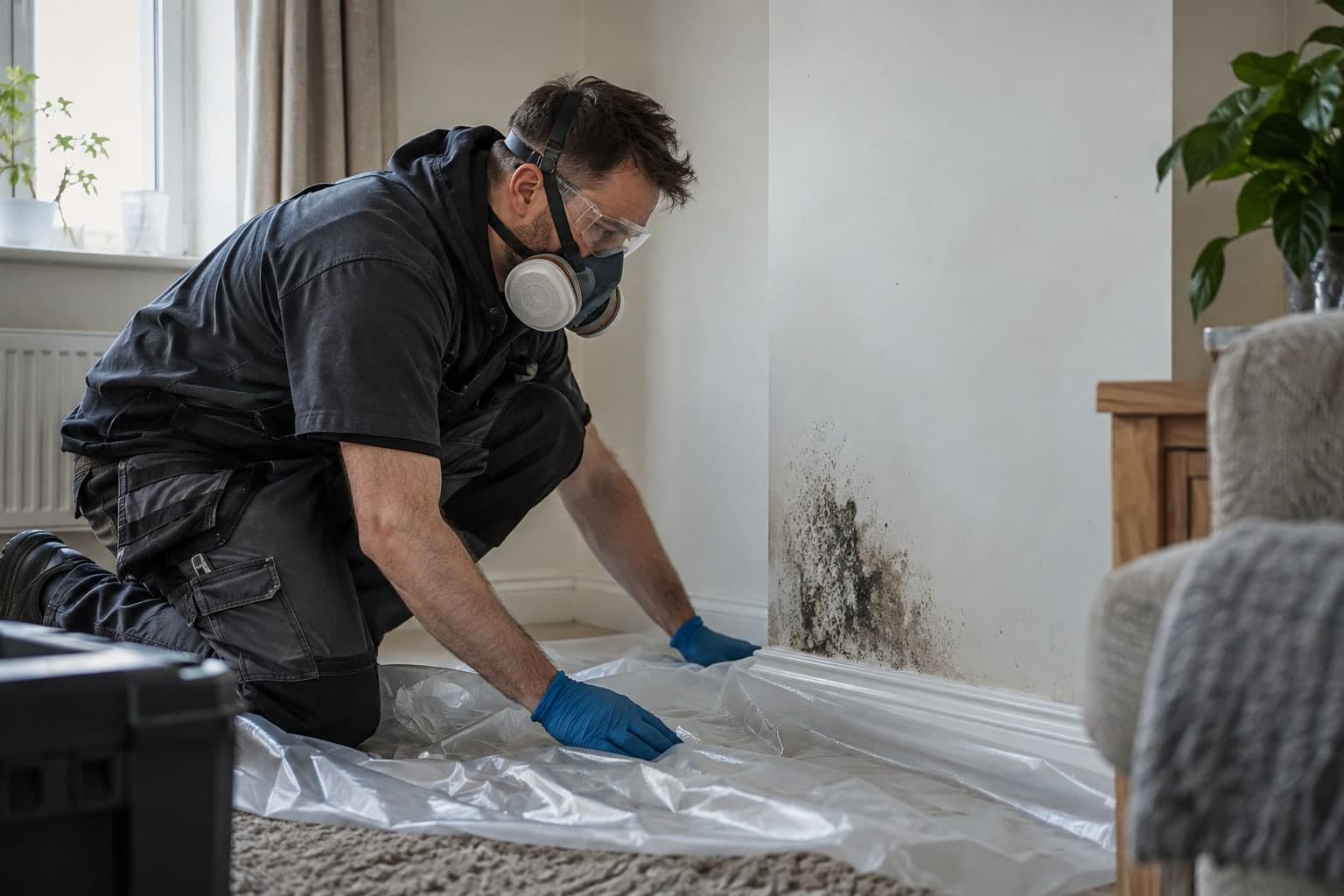
To get rid of black mould on walls for good, you need to do two things: kill the existing mould with a proper fungicidal wash, and fix whatever is making the wall damp in the first place. Miss the second step and the mould comes back within weeks - often in a larger patch than before.
Most landlords and property managers have been here. The quick fix - a wipe with bleach, a coat of paint over the stain - appears to work for a month or two. Then the tenant calls again. This guide covers what actually works, why DIY cleaning has its limits, and when you need a professional.
What you need before you start
Before treating any mould on walls, gather the right kit. Do not start without gloves and respiratory protection - black mould releases spores when disturbed and these can carry real health risks, particularly for anyone with asthma or allergies.
- Rubber or nitrile gloves - heavy duty, not thin washing-up gloves.
- A close-fitting face mask - FFP2 or FFP3 rated.
- Disposable cloths or sponges - never reuse them.
- A dedicated fungicidal mould wash - not household bleach.
- Sealable bags for disposing of used cloths immediately.
- A fan or dehumidifier to dry the wall thoroughly after treatment.
- Anti-mould primer or paint for once the wall is dry.
How to get rid of black mould on walls: step by step
Work methodically. Rushing the process - or skipping the drying stage - is why most DIY attempts fail and the mould returns. This guide covers painted and plastered walls; for removing mould from bathroom ceilings and silicone, see our dedicated guide - those surfaces need a slightly different approach.
Step 1: ventilate the room
Open the windows in the affected room and close the door to the rest of the property. You want fresh air flowing through but you do not want mould spores drifting to other areas. If the room has an extractor fan, switch it on.
Step 2: wet the mould before you touch it
Never brush or scrub dry mould. Dry mould releases a cloud of spores the moment it is disturbed. Spray your fungicidal wash directly onto the affected area first and let it settle for a minute before touching it.
Step 3: apply a fungicidal wash
Apply a purpose-made fungicidal wash generously to the mouldy surface. Household bleach is not the same thing - it can lighten the staining but it does not penetrate the mycelium, the root structure beneath the surface. Purpose-made fungicidal washes are formulated to kill mould at depth.
Leave the product to dwell for as long as the manufacturer recommends - usually 15 to 30 minutes. Do not rush this stage.
Step 4: wipe and dispose
Using a disposable cloth, wipe away the mould working from the outside edge inward. Bag the cloth immediately in a sealed bag and discard it. Repeat with fresh cloths until the surface is clean.
Step 5: dry the wall completely
This is the step most people skip - and it is why the mould returns. Run a dehumidifier in the room for 48 to 72 hours, or use a fan with windows open to drive out the moisture. The wall must be completely dry before any paint or primer goes on. Any remaining dampness will trigger regrowth almost immediately.
Step 6: seal with anti-mould paint or primer
Once the wall is bone dry, apply an anti-mould primer before redecorating. Standard emulsion applied over a treated but unprimed wall will not hold if there is any residual moisture. Anti-mould paint adds a protective layer that makes it significantly harder for mould to recolonise the surface.
How large a patch can you treat safely yourself?
Surface treatment is reasonable for small, contained patches - roughly under one square metre. Anything larger raises two problems: the area is large enough to carry a real spore risk during cleaning, and size usually indicates a more serious underlying moisture problem rather than surface condensation.
If mould extends into corners, behind skirting, beneath the plaster, or keeps returning to the same spot despite treatment, the right call is to use a professional rather than repeat the cycle of cleaning and repainting.
Why black mould keeps coming back after cleaning
Surface cleaning removes visible mould. It does not remove the conditions that created it. Mould spores are present in the air in every building - they only colonise a wall when that wall is consistently damp or cold enough for moisture to condense on it. If those conditions remain unchanged, spores land and regrow within weeks.
The most common moisture sources behind persistent wall mould include:
- Poor ventilation - no working extractor fan, windows that cannot be opened, or rooms with very little air movement.
- Cold walls - thin or uninsulated external walls that cause condensation to form on the inside surface.
- Heating that is inadequate or too costly for tenants to run at a consistent temperature.
- Hidden leaks - a slow drip from a pipe or radiator behind the wall.
- Penetrating damp - rainwater getting through the external wall, roof, or poorly maintained gutters.
- Rising damp - moisture from the ground moving up through the structure.
The permanent fix: addressing the moisture source
Once the visible mould has been treated, investigating and fixing the cause is what makes the result last. Common questions to ask: does the room have a working extractor fan? Are there trickle vents or windows that actually open? Is the room adequately heated? Has the wall been checked for a hidden leak? Is there evidence of penetrating or rising damp?
Depending on what the investigation finds, common remedial works include:
- Fitting or upgrading an extractor fan in bathrooms and kitchens.
- Installing trickle vents or a positive input ventilation (PIV) unit.
- Improving wall insulation to raise the internal surface temperature and reduce condensation.
- Repairing roof, gutter, pipe or plumbing leaks.
- Addressing a failed or absent damp-proof course where rising damp is confirmed.
When to call a professional mould removal company
There are situations where professional mould removal is the right choice - not just for safety, but because it is the only way to fully resolve the problem and document it properly, which matters when you need to show you have met your legal responsibilities as a landlord:
- The affected area is larger than one square metre.
- Mould has penetrated behind plasterboard, into the wall structure, or into a loft or roof void.
- The same patch keeps coming back despite surface cleaning.
- A tenant has reported health symptoms such as a persistent cough, worsening asthma, or skin irritation.
- The property is being prepared for a new tenancy and documented evidence of proper treatment is needed.
- A council inspector or housing association surveyor has raised a concern.
How Simpled Services removes black mould
We do not just clean the surface. Before any treatment, we investigate the moisture source - checking for leaks, assessing ventilation, and reading the pattern of the mould to understand what is driving it. Treatment that ignores the cause is money wasted.
Our process uses professional-grade fungicidal wash applied to the affected area and, where needed, to the surrounding surfaces to prevent spread. We then advise on or carry out any remedial work needed to fix the moisture source. Every mould job comes with a 12-month guarantee.
We have completed over 8,500 jobs and are Constructionline Gold certified and fully insured. We work with housing associations, councils, letting agents and private landlords across London and the South of England. Send us a photo on WhatsApp and we will come back with a quote fast.
If you need a hand, Simpled Services can help. Call us on 020 4571 7367, message us on WhatsApp at the same number (020 4571 7367), or email hello@simpledservices.co.uk and we will take it from there.