
What causes mould in a house? The short answer is moisture. Mould spores are present in the air of every building and will only take hold when they land on a surface that stays damp long enough. The cause of that dampness, though, varies - and it matters, because condensation mould, penetrating damp, rising damp, and a hidden leak each need a completely different fix. Choose the wrong approach and the mould returns within weeks.
For landlords and property managers, getting the diagnosis right matters for a second reason: the law now expects you to act when mould is reported, and addressing the surface while leaving the moisture source in place is not compliance. This guide covers the main causes of mould in UK homes, why each one looks different, and what actually stops it coming back.
The main causes of mould in a house
Condensation - the most common cause
Condensation is behind the majority of mould found in UK homes, particularly in properties built before cavity wall insulation became standard. It forms when warm, moisture-laden air meets a cold surface - the inside face of an external wall, a corner where two external walls meet, a window reveal, or the back of a wardrobe pushed against an outside wall. As the air cools at that surface, moisture deposits and, over time, gives mould the persistent dampness it needs to grow.
The moisture in the air comes from everyday living: cooking, showering, breathing, and drying clothes. In a typical home, these activities release several litres of water vapour into the air each day. If that moisture cannot escape through ventilation and the heating is not sufficient to keep wall surfaces warm, condensation forms. Our guide to the key sources of mould growth in a home breaks down where that moisture comes from room by room, and our black mould vs condensation mould guide explains how to tell whether what you're looking at is condensation or something more serious.
Poor ventilation
Kitchens and bathrooms generate the most moisture, and rooms without working extractor fans or opening windows concentrate that moisture in the air. Without a route out, it drifts through the property and deposits on the coldest surfaces it finds. Trickle vents blocked with paint or debris, fans that have failed, and internal layouts that trap air in corners all make the problem worse.
In practice, ventilation problems and cold surfaces nearly always appear together. A well-ventilated room with warm walls will rarely have condensation mould - it is the combination that creates the right conditions.
Penetrating damp
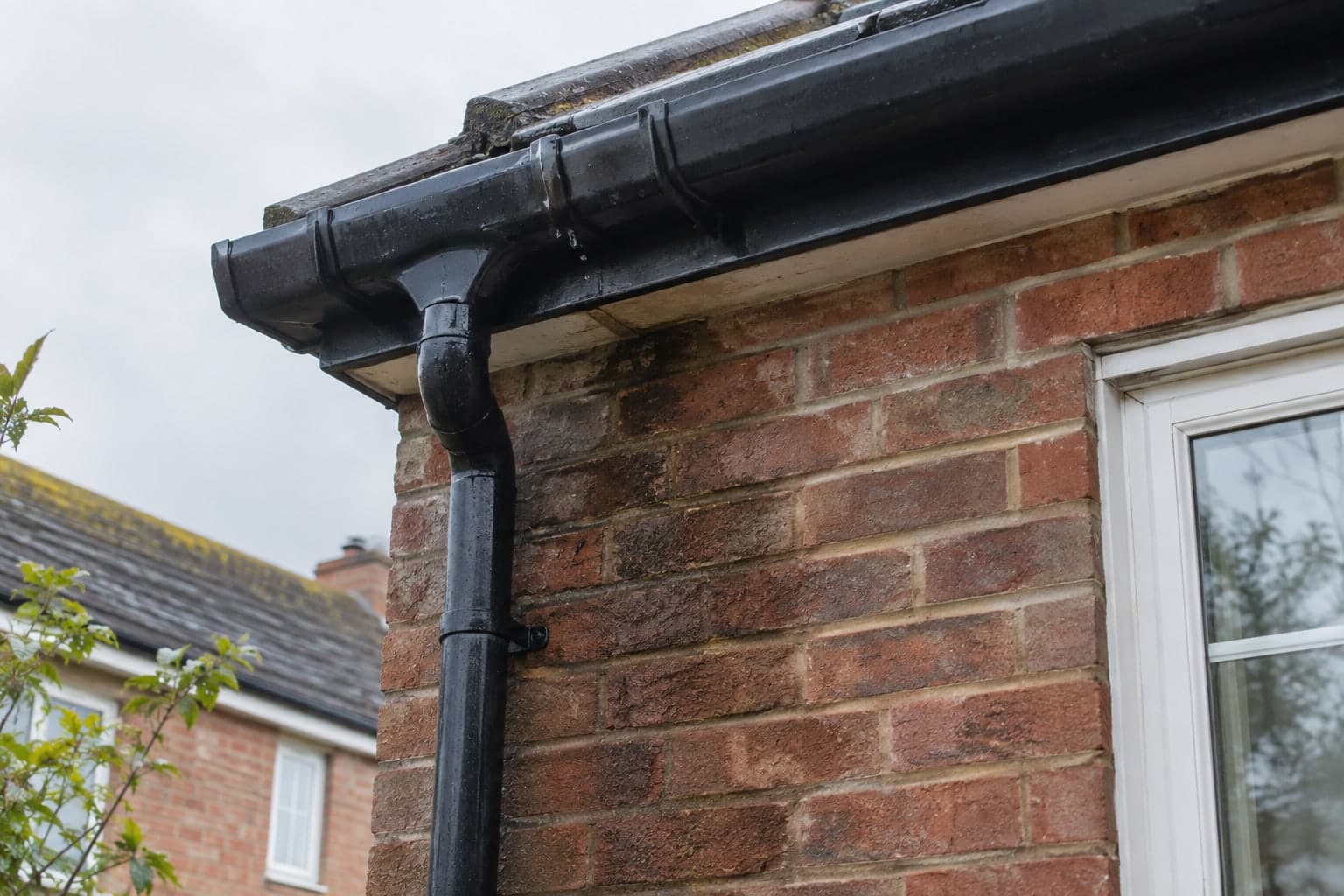
Penetrating damp is water getting in through the fabric of the building rather than from condensation. The entry points are typically a failed or missing mortar joint, cracked render, a loose roof tile, a blocked gutter sending water back into the wall, a failed window seal, or damaged flashing around a chimney or roof junction.
Penetrating damp tends to be localised - it concentrates at and around the entry point and spreads outward from there. The key diagnostic sign is that the damp patch does not respond to better ventilation. You can improve air extraction as much as you like and a penetrating damp problem will still be there because the moisture is entering from outside, not from the air inside.
Rising damp
Rising damp occurs when ground moisture travels upward through a wall by capillary action. It is associated with properties that have no damp-proof course, or one that has failed or been bridged - for example, by a raised flower bed against an external wall or a solid floor screed poured over the original course. It is less common than condensation and penetrating damp but does occur in older and period properties.
The signs are distinctive: a tidemark on the lower section of the wall (usually below one metre), salt deposits on the plaster surface as ground salts are brought up with the moisture, and peeling plaster or paint at low level. A damp meter reading that stays elevated at consistent height around the perimeter of a room, away from any obvious external source, points strongly to rising damp.
Leaks from pipes, radiators and the flat above
A dripping pipe joint, a slow leak from a radiator valve, a failing waste trap under a sink, or water coming through from the property above can all feed mould without announcing themselves in any other way. Hidden leaks often make themselves known through a patch of mould on a wall or ceiling some distance from the actual leak point, because water travels along pipes, joists, and the inside face of plasterboard before it emerges somewhere visible.
If mould appears at ceiling level and there is a bathroom, kitchen, or wet room above, a leak from above is always worth checking before concluding the cause is condensation.
Cold spots and poor insulation
Even in well-ventilated properties with adequate heating, cold spots can create localised areas where condensation forms. Structural thermal bridges - paths where heat escapes through a solid material bypassing insulation - keep certain surfaces cold regardless of the room temperature. Common examples are around window frames, at the junctions between external walls and floors or ceilings, around lintels, and where solid structural elements pass through insulated walls.
These cold spots explain why mould sometimes appears in one specific corner or along one wall in an otherwise well-maintained property. The rest of the room may be fine, but that single cold surface stays below the dew point long enough for mould to establish.
Why mould keeps coming back after cleaning
Surface cleaning removes visible mould. It does not remove the moisture source. Mould spores are always present in the air of any building, and all they need to colonise a surface again is for it to remain cold and damp. Clean the mould on a condensation-driven wall without improving ventilation or raising the surface temperature, and the mould regrows on the same patch within weeks - often more extensively, because disturbing the mould during cleaning disperses spores through the room, which carries its own health risks.
Painting over mould compounds the problem. Standard emulsion applied over damp plaster gives the mould somewhere to grow just beneath the surface, hidden from view. It usually pushes through the paint within a month or two, in a larger area than before.
How to stop mould coming back - fixing each cause
The right fix depends entirely on the cause. This is why diagnosis always comes first. Once you know what you are dealing with, the remediation is usually straightforward:
- Condensation mould: install or upgrade extractor fans in bathrooms and kitchens, fit trickle vents to windows, consider a positive input ventilation (PIV) unit for properties with persistent condensation, and heat the property consistently rather than letting rooms go cold for long periods.
- Penetrating damp: find and seal the entry point - repoint mortar joints, repair or replace render, fix roof tiles, clear gutters, reseal window frames, and repair flashings at roof junctions.
- Rising damp: inject a new damp-proof course or tank the wall internally, and remove any material bridging the existing course against the external wall.
- Leaks: locate the exact source - use a plumber or leak tracer if needed - repair or replace the faulty component, then allow the wall to dry fully before treating the mould.
- Cold spots and thermal bridging: improve wall insulation where practicable, seal draught gaps at floor and ceiling junctions, upgrade to warm-edge spacer bars in double glazing, and use anti-mould primer as a secondary measure on treated surfaces.
When to get a professional diagnosis
Some causes are straightforward to spot: a blocked gutter, an obviously failed window seal, an extractor fan that has stopped working. Others are not. A damp patch that does not fit the pattern of condensation mould, mould that returns repeatedly to the same spot despite surface treatment, or any sign of moisture in the wall structure all warrant professional diagnosis before committing to a remediation approach.
A professional uses damp meters to measure moisture levels at different depths within the wall, distinguishing surface dampness from structural moisture. Looking at the pattern of growth, the location, and the meter readings together usually narrows the cause quickly - and getting this right before spending money on the fix saves time and avoids the frustration of treating the wrong problem.
Equally important for landlords: a professional inspection produces a written record of what was found and what was done. If a tenant has already reported the mould, that documentation protects you and demonstrates you met your legal duties as a landlord.
We work with landlords, letting agents, housing associations and councils across London and the South of England, offering mould removal across London and the wider South East. We carry Constructionline Gold accreditation, are fully insured, and have completed over 8,500 jobs. Every mould job comes with a 12-month guarantee. Send us a photo on WhatsApp and we will come back with a quote quickly.
If you need a hand, Simpled Services can help. Call us on 020 4571 7367, message us on WhatsApp at the same number (020 4571 7367), or email hello@simpledservices.co.uk and we will take it from there.