
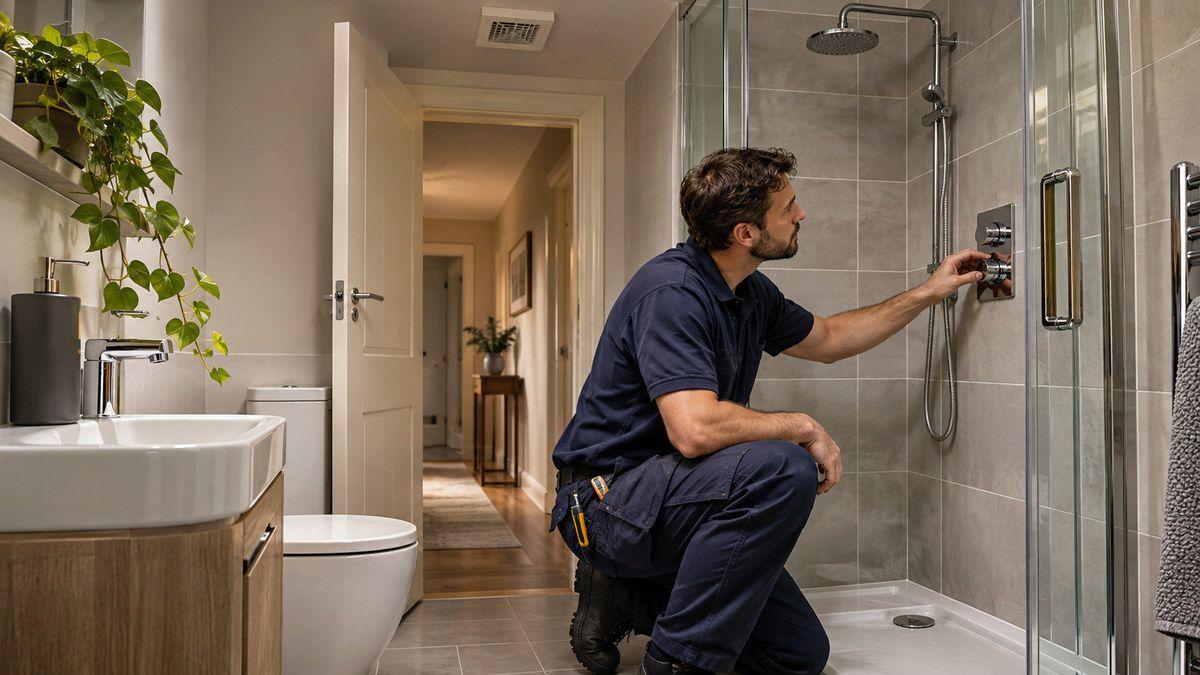
For mould in a bathroom without a window, start with an assessment of the extraction system. The repair brief should cover the air route, suitable controls and affected surfaces. This guide helps you agree that brief before buying equipment.
This applies in England.
If you have symptoms, see your GP or call 111. Call 999 if someone is struggling to breathe.
Start with the existing extraction system
A windowless bathroom has no window to open after a shower. Advice to open one cannot solve the problem in this room. Make that limitation clear when reporting mould or arranging a visit, so the proposed repair deals with the bathroom as it actually is.
Before ordering a replacement, establish what is already installed. A grille on the ceiling does not tell you where the air goes, and hearing a motor does not demonstrate useful extraction. The inspection brief should identify the fan, its controls, its discharge route and any accessible maintenance points.
The first decision is whether the existing system needs servicing, repair or replacement. Record whether it starts reliably, when it stops and whether the grille is obstructed. These observations give the contractor a starting point; they do not establish that a new fan is needed. Request a written explanation of the fault and proposed remedy.
Also explain when the bathroom stays wet and whether the problem changed after previous work. Persistent staining near a pipe or dampness unrelated to bathing needs investigation alongside extraction. Our guide to condensation, damp or a leak helps explain that separate diagnostic question. The missing window should not become the automatic explanation for every patch.
Put the air route in the quote
For a proposed installation, include a sketch showing the extraction grille, duct route, fan position and intended outlet in the requested quote. The contractor should explain how the arrangement removes moist air and where replacement air comes from. Treat this as part of the design rather than choosing a fan from its appearance.
The quote should identify any ceiling or wall that needs opening, how it will be made good and how the equipment will remain accessible. This gives you a clearer comparison between proposals. A price for the visible fitting alone leaves uncertainty about the work elsewhere in the system.
Where the bathroom connects to shared extraction, establish who maintains that equipment before agreeing to an individual replacement. Have the contractor explain whether the proposed work suits the shared arrangement. Include any access or permission needed in the job plan, rather than discovering it after equipment has been bought.
Keep the intended outcome specific: a checked extraction route with equipment selected for that route and instructions for its use. This article is a repair-brief guide, not a fan sizing specification. The installer needs to assess the room and existing system before selecting the equipment or changing openings.
Compare controls before buying equipment
Government guidance gives two bathroom control options: a humidity-controlled fan that starts when moisture reaches its set level, or a fan linked to the light that continues running afterwards. These are options to discuss for the assessed installation, rather than a reason to replace every existing fan.
For a humidity-controlled proposal, include an explanation of the setting and a demonstration of operation in the handover. For a light-linked proposal, include a demonstration of what happens after the light is switched off. The resident should be able to recognise normal operation without opening equipment or adjusting electrical parts.
Have the installer choose the timer or sensor settings after assessing the room. Record the agreed settings with the instructions. If the controls later prove awkward to use, that record gives the maintenance contractor something definite to review instead of leaving the resident to experiment.
Discuss noise, switch access and difficulties with the current controls before selecting equipment. Include a practical explanation of normal use and maintenance isolation. Electrical work needs a competent person, and the fitting needs to suit the bathroom environment. Buying equipment before that assessment can leave the quote and the selected fitting at odds.
Include the affected surfaces and other repairs
Extraction work does not itself remove existing mould or repair a water leak. List the affected finish, proposed mould treatment and any separate moisture repair as distinct parts of the brief. This makes it easier to see what is included and prevents a fan replacement from being treated as the whole job.
Where a ceiling remains cold or damp despite working extraction, include assessment of heating and the building fabric. Government guidance lists building defects, ventilation and inadequate heating among the matters to consider when addressing condensation. A proposal should explain which findings it addresses rather than assume a larger fan answers every problem.
For mould affecting the ceiling or shower joints, the bathroom ceiling and silicone guide covers those affected surfaces in more detail. Use that alongside the extraction brief when both kinds of work are needed. The quote should say who handles each part and when the finish can be repaired or redecorated.
Before work starts, agree how changes to the scope will be handled if opening up reveals another defect. Keep photographs and the contractor's explanation with the repair record. That gives the next person a useful account of what was found, rather than only an invoice saying that a fan was fitted.
Agree the handover and follow-up
At handover, request a demonstration of operation and an explanation of how performance was checked. Keep the equipment details, control settings, discharge arrangement and any outstanding work together. Instructions should be available to the resident and whoever will maintain the system, rather than filed somewhere neither can reach.
Include a maintenance arrangement in the handover. Government guidance recommends professional inspection and maintenance of ventilation equipment. Establish who will arrange it, how access works and where faults should be reported. Leave the proposed servicing schedule to the professional assessing the equipment and installation.
Arrange a follow-up visit to check the repair outcome. Useful observations include whether surfaces dry more readily, whether controls are practical and whether mould returns. These observations support the review but do not replace checking the equipment. If the room remains damp, return to the findings and completed work before commissioning another replacement.
Sources
Government damp and mould guidance describes humidity and light-linked overrun controls for bathrooms, ventilation maintenance and the building, ventilation and heating factors relevant to condensation.
HSE guidance on electrical work supports using competent people and selecting equipment suitable for its task and environment.
This guide was drafted with AI assistance and checked automatically against the official sources listed above.
This is general information, not legal advice.