
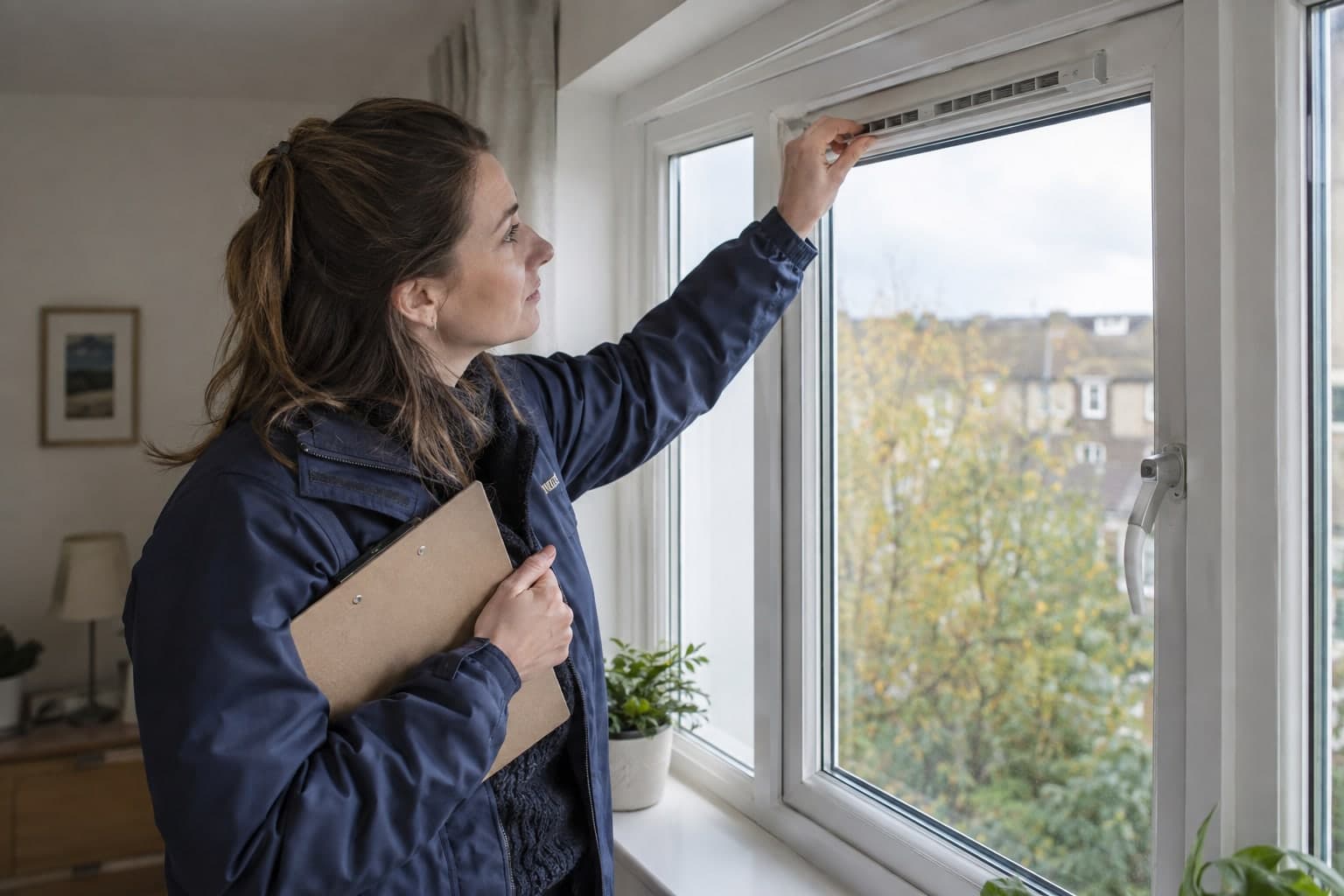
A mould prevention checklist is the most practical tool a landlord or property manager has going into the colder months. Mould does not appear overnight - it builds up over weeks as temperatures fall, condensation forms and moisture is not removed. Working through a checklist before September and October, while the weather is still manageable and contractors are not yet at full stretch, is the difference between a problem you prevent and a problem you pay to remediate.
The colder months bring a predictable spike in mould calls. Tenants turn the heating on, windows stay closed more often, cooking and bathing generate more moisture, and the gap between warm humid indoor air and cold wall surfaces widens. Properties that were fine all summer can develop visible mould within weeks of the first cold snap. Most of it is preventable if the underlying conditions - poor ventilation, inadequate heating, cold spots in the fabric - are addressed before it starts.
This checklist covers the four main areas where action now stops a call-out later: ventilation, heating, the building fabric, and the changeover period between tenancies. Work through it once a year, ideally in August or early September, and keep a record that you have done so.
Why the colder months drive mould in rental properties
Mould needs three things: moisture, a surface to grow on, and the right temperature. In summer, windows are open, rooms ventilate naturally, and surface temperatures across the building are close to room air temperature. Condensation rarely forms because warm surfaces and warm air hold moisture at roughly the same level.
As soon as the heating season starts, that balance shifts. Tenants close windows and run hot showers, cooking, and the tumble dryer. Indoor humidity rises. At the same time, external walls, corners, and single-glazed window frames cool down sharply. The dew point - the temperature at which air deposits moisture onto a surface - is reached on those cold spots. Mould follows within days.
Preventing mould in autumn is therefore about closing the gap between the humidity of the indoor air and the temperature of vulnerable surfaces. You do that in two ways: reduce moisture in the air, and keep surfaces warm enough that condensation does not form on them.
Ventilation checklist
Ventilation is the single most effective mould prevention measure in a rental property. If moist air can escape, condensation on cold surfaces is reduced, and mould has less to feed on. Check all of the following before the heating season starts.
- Test every extractor fan in the kitchen and bathroom. Hold a piece of tissue at the grille - it should be pulled firmly to the surface. Replace any fan that is weak, noisy, or not running. A failed extractor fan in a bathroom is one of the most common direct causes of mould.
- Check that fan ducts are clear and terminate outside the building. Fans that duct into the loft space, a wall cavity, or nowhere at all are worse than useless - they pump moist air into the fabric of the building.
- Look for trickle vents on windows. If they have been painted over, blocked, or removed, reinstate them. Trickle vents are the minimum continuous ventilation most modern windows provide.
- In older properties with no trickle vents and no mechanical ventilation, consider whether a whole-house ventilation unit (PIV system) is warranted. A PIV unit introduces a steady trickle of fresh air from the loft and significantly reduces condensation problems across the whole building.
- Check that any positive input ventilation or heat recovery units are running, that filters are clean, and that service intervals are up to date.
- Remind tenants (in writing, so you have a record) to use extractors during and after cooking and bathing, and to leave trickle vents open. Note this is guidance, not a defence against a property-caused mould problem - it documents that you have done your part.
Heating checklist
A property that cannot be heated adequately will develop mould regardless of how well it is ventilated. Cold surfaces condense moisture faster than it can be removed. Check the heating system before the cold weather arrives, not after a tenant calls to say the boiler has stopped.
- Service the boiler annually. Gas boilers must have a valid Gas Safety Record (CP12) from a Gas Safe registered engineer. Service the boiler at the same visit and keep both documents.
- Bleed radiators to remove trapped air. A radiator that is cold at the top is not heating the room it is in - the room stays colder, and cold spots on external walls become more pronounced.
- Check that every room has working heat. A room with no radiator, or a radiator that does not function, will develop condensation on its external wall surfaces when outdoor temperatures drop.
- Test thermostatic radiator valves (TRVs) to confirm they open and close smoothly. A stuck TRV will leave a room cold all winter.
- Check that the heating controls - programmer, room thermostat - are working and set to a minimum of 18 degrees C. A property that cannot maintain a basic background temperature in all rooms is more likely to develop mould.
- If the property has solid-fuel or oil heating, confirm the annual service is booked and that delivery arrangements for fuel are in place before October.
Building fabric and insulation checklist
Ventilation and heating address the moisture side of the equation. The building fabric addresses the cold surface side. Cold surfaces form where there is poor insulation, thermal bridging, or moisture entering through the structure. These checks are slower to act on but they are where the permanent fixes lie.
- Walk every external wall at ground level and look for tide marks, staining, or salt efflorescence. Any of these suggests penetrating or rising damp - moisture entering the structure from outside. This drives mould independently of how the building is heated or ventilated, and needs investigation before the wet season.
- Check the roof, gutters, and downpipes. A leaking gutter deposits water against an external wall over weeks and months, softening the masonry and creating a permanently damp patch that will mould in winter.
- Inspect window and door frames for gaps in sealant, failed double-glazed units (visible as permanent misting between the panes), or damaged draught-sealing. Cold frames are reliable mould sites.
- In rooms with single-glazed windows, consider whether secondary glazing or upgraded units are practical. Single-glazed windows are consistently the coldest surfaces in older properties and they are the first place condensation forms.
- Check loft insulation depth and coverage, particularly at the edges where the insulation often thins out over the eaves. Cold rooms directly under a poorly insulated roof are a common source of ceiling mould.
- Look at corners of rooms where two external walls meet - these are the coldest thermal bridges in most UK period properties. If previous mould has been cleaned but the underlying surface feels noticeably colder than the rest of the room, the fix is insulation or a PIV system, not cleaning.
Between-tenancy checklist
The period between tenancies is the best opportunity to catch existing mould, carry out any remediation, and put measures in place before a new tenancy starts. A new tenant arriving at a property with hidden mould will have a legitimate complaint almost immediately.
- Move furniture away from external walls and inspect the wall surfaces behind and underneath. Mould behind wardrobes and beds is one of the most commonly missed problems at tenancy changeover.
- Check inside built-in wardrobes on external walls. The back panels of wardrobes that sit tight against cold walls are frequently moulded, and the problem spreads to the wall before it is noticed.
- Lift bath panels and check under baths, around shower trays, and behind cisterns. Slow leaks in these areas cause mould and rot that is completely hidden until the next inspection.
- Test all extractor fans and note their condition in the inventory. A written record that the fan was working at the start of the tenancy is useful if the issue arises later.
- Treat any existing mould before the new tenancy starts. Surface cleaning with mould remover is a short-term step. If the mould is extensive, or has returned after previous cleaning, commission a professional treatment. We offer a 12-month mould guarantee on our treatments, which means if it returns within a year, we come back.
- Note any cold spots or areas of persistent condensation staining in the property condition report. If they are not acted on before a new tenancy, they will become a complaint within the first cold season.
When to bring in a professional
A checklist helps you identify and prevent problems, but some issues need specialist attention. If any of the following apply, the right step is to commission a professional inspection rather than attempting a DIY fix.
If mould has returned in the same spot after cleaning, the underlying cause has not been addressed. A moisture meter survey will identify whether the cause is condensation, a structural leak, rising damp, or a combination - and point to the permanent fix.
If a tenant has raised a written complaint about damp or mould, the clock is running on your obligation to investigate and respond. Under the Renters' Rights Act 2025 and the updated Decent Homes Standard framework now being extended to the private rented sector, documented inaction on damp and mould complaints carries real risk. Commissioning a professional inspection promptly, acting on the findings, and keeping records of both is the defensible position.
Simpled Services has completed over 8,500 jobs for landlords, letting agents, housing associations, and councils across London and the South of England. We carry Constructionline Gold accreditation and are fully insured. If your property needs a damp and mould survey, a treatment, or a ventilation upgrade, a photo on WhatsApp gets you a quote the same day.