
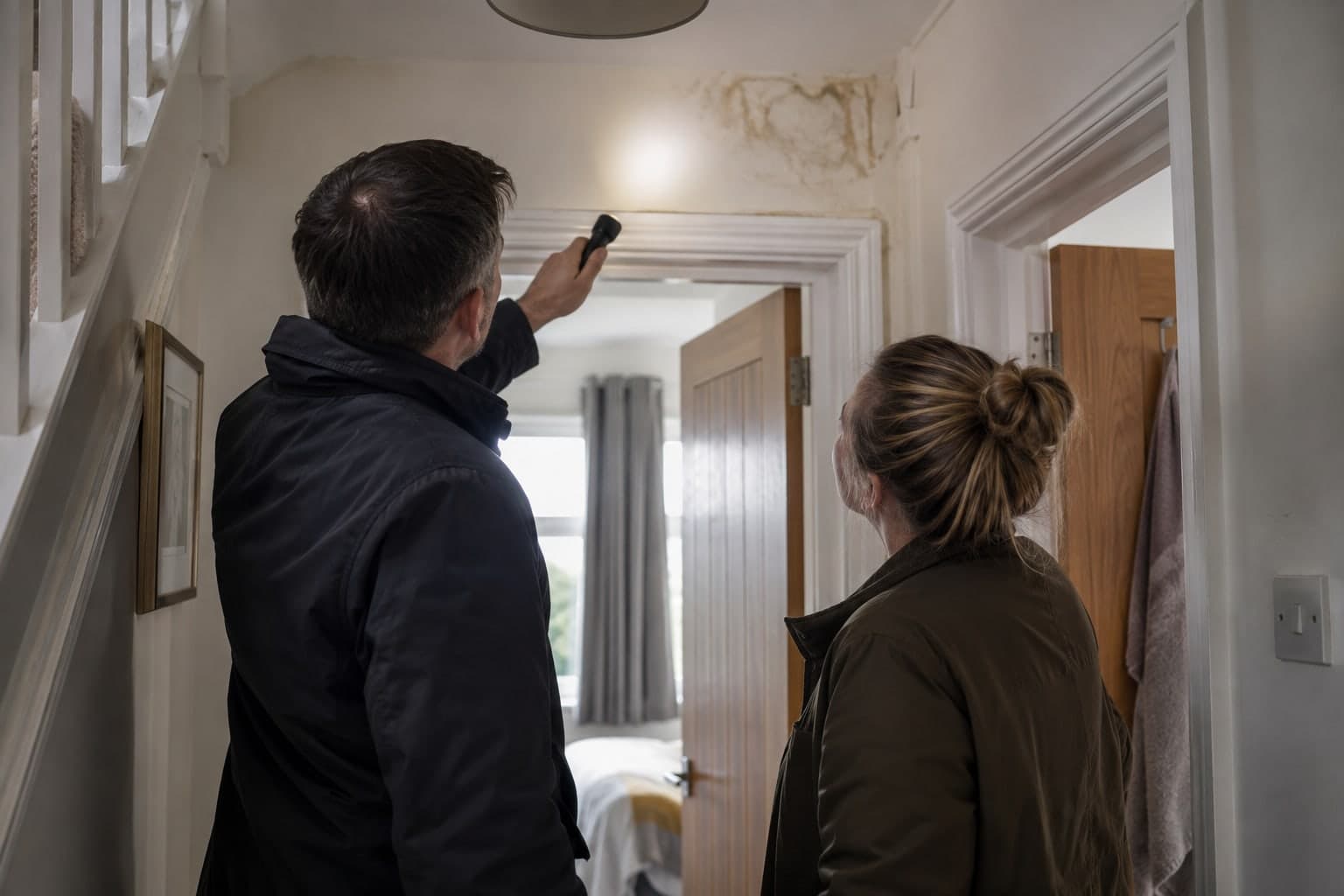
Mould in an HMO is the landlord's responsibility - and the exposure is greater than in a single-let property. Multiple occupants in shared accommodation generate more moisture, shared kitchens and bathrooms are the highest-risk spaces in any property, and HMO landlords operate under a licensing regime that gives councils a clear route to enforcement when things are not right.
If you manage a house in multiple occupation and a tenant reports mould, the obligations under the HMO Management Regulations, the Housing Health and Safety Rating System, and the Homes (Fitness for Human Habitation) Act all apply - and your licence is at stake if the council decides you are not managing the property properly.
This guide explains why mould is a particular problem in HMOs, what the law requires, and the practical steps that actually fix it.
Why mould is more common in HMOs
Shared houses produce more moisture than single-family homes. More people means more cooking, showering, breathing and drying clothes - all of which push humidity up. In a poorly ventilated shared bathroom used by four or five people, the air is almost constantly laden with water vapour, and condensation forms on cold surfaces within minutes of anyone showering.
HMOs are also more likely to be older converted properties with solid walls, single-glazed windows and minimal insulation. Cold surfaces in shared spaces create the ideal conditions for mould: warm, humid air meets a cold wall or ceiling and the moisture drops out as condensation. Add tenants who may not feel responsible for ventilating a space that is not exclusively theirs, and the conditions for mould become persistent.
- Shared bathrooms and kitchens carry far higher moisture loads than a single household would generate.
- Older converted properties often lack effective ventilation in rooms that were never designed as bathrooms or kitchens.
- Tenants in HMOs sometimes avoid opening windows or running fans in shared areas to avoid conflict or keep heating costs down.
- Landlords are responsible for common areas - kitchens, hallways, bathrooms - where mould often starts.
Your legal duties as an HMO landlord
HMO landlords are not just bound by the standard landlord obligations. The Management of Houses in Multiple Occupation (England) Regulations 2006 set out specific management duties that sit on top of everything else, and mould falls across several of them.
HMO Management Regulations
The HMO Management Regulations require managers to keep the property in good repair, maintain common areas in a clean condition, ensure the property is free from hazards and take reasonably practicable steps to protect occupants from risks to health and safety. A mould problem in a shared bathroom, kitchen or hallway is a direct breach of these duties. Councils do not need to wait for a formal tenant complaint - they can inspect licensed HMOs proactively.
HHSRS: the hazard assessment framework
The Housing Health and Safety Rating System is the framework councils use to assess hazards in rented homes, and damp and mould growth is one of the assessed categories. From 23 June 2026 the HHSRS applies 21 hazard categories (streamlined from 29), with damp and mould remaining a priority hazard. A Category 1 hazard - a serious, unacceptable level of risk - triggers a duty on the council to take enforcement action. In a licensed HMO, a Category 1 damp or mould hazard can lead to enforcement notices, improvement notices or, in serious cases, a management order.
Homes (Fitness for Human Habitation) Act 2018
Under this Act, every rented home must be fit to live in throughout the tenancy. Serious mould and damp can make a property unfit, and any tenant - including an HMO tenant - can bring a claim in the county court without going through the council first. The court can order the works to be done and award compensation. In an HMO where several tenants are affected, the potential claims multiply accordingly.
A note on Awaab's Law
Awaab's Law, which sets strict investigate-and-fix timescales for damp and mould, currently applies to social landlords, not private HMO landlords. It extends to a wider range of hazards in social housing from 30 November 2026, and the government has indicated it will be extended to the private rented sector under the Renters' Rights Act 2025 in a later phase - but no confirmed date has been announced. Even so, the clear direction of the law is toward faster response times and documented action, and councils increasingly expect private landlords to work to comparable standards. Acting promptly when mould is reported is the right approach regardless of which specific rule applies.
Ventilation requirements in an HMO
Ventilation is both a cause of mould when it is absent and a requirement that councils check on inspection. For licensed HMOs, the standards expected are specific - our guide to how much ventilation you need to stop mould covers the numbers for an ordinary let.
- Bathrooms must have mechanical ventilation that extracts directly to outside air - not into a loft or roof void. A minimum extraction rate of 15 litres per second is the accepted standard.
- Kitchens need adequate ventilation to remove steam and cooking moisture - an extractor hood or fan venting directly outside is required.
- Habitable rooms should have openable windows and, ideally, trickle vents to allow background ventilation without occupants needing to leave windows open.
- Positive input ventilation units can help in properties where adequate natural ventilation is difficult to achieve through the building's design.
- All mechanical ventilation must be maintained in working order - a broken extractor fan in a shared bathroom is a management failure under the HMO Regulations.
How to deal with mould in an HMO: step by step
When mould is reported or found on inspection, the response matters as much as the fix. A documented, methodical approach protects your licence and your legal position.
Step 1: Respond promptly and in writing
Acknowledge the report quickly and confirm in writing what you will do and when. Councils and courts look for evidence that landlords took complaints seriously from the outset. Do not ask the tenant to manage the mould themselves - in a licensed HMO, the responsibility for common areas and for structural causes sits with the landlord.
Step 2: Investigate the actual cause
Surface mould is a symptom. Before treating it, identify where the moisture is coming from. In an HMO this is usually inadequate ventilation in a shared bathroom or kitchen, a structural defect letting water in, or a building that cannot be kept warm enough to prevent condensation on cold surfaces. A thorough investigation of what is causing the mould before any works are agreed saves money and prevents the problem returning.
Step 3: Treat the mould and fix the underlying cause together
Professional treatment removes the existing mould colony from walls, ceilings and affected surfaces. But if the cause is not fixed at the same time - extractor fans installed, a leak repaired, insulation improved - the mould returns within months. In an HMO the cycle of repeated surface-only treatment is both expensive and evidence of a management failure if the council looks at your records.
We carry a 12-month guarantee on our mould treatment work, which means we are confident in addressing both the mould and the conditions that caused it. Treating both together is the only approach that lasts.
Step 4: Keep thorough records
Date of report, what you inspected, what you found, who carried out the works and when - all of this needs to be documented. In the event of an inspection, an enforcement notice or a claim, your maintenance records are the evidence that you managed the property responsibly. A gap in records is routinely treated as a gap in management.
What the council looks for on an HMO inspection
HMO licensing inspections are not just a once-at-grant check. Councils can revisit, and tenant complaints often trigger an unannounced visit. When an inspector looks at a mould problem, they are checking several things at once:
- Is the ventilation adequate and working? Broken or absent extractor fans are an immediate concern.
- Is there a maintenance record - dates of reports, responses, works completed?
- Is the mould localised or widespread? Widespread mould across multiple rooms suggests a systemic management failure.
- Is there an underlying structural cause - a leak, rising damp or penetrating damp - that has not been addressed?
- Are common areas being kept clean and in good condition as required by the HMO Management Regulations?
How Simpled Services helps HMO landlords
We work with HMO landlords, letting agents, housing associations and councils across London and the South of England. Our mould removal service for shared properties covers the full process: investigation, professional treatment, ventilation assessment and recommendations, and follow-up documentation that supports your compliance records.
With over 8,500 jobs completed and Constructionline Gold accreditation, we are a fully insured contractor that HMO landlords and housing associations trust to handle reported mould cases properly. A photo on WhatsApp is often the fastest way to get an initial assessment.
This is general guidance, not legal advice. If you are facing an enforcement notice, a licence review or a formal disrepair claim, take proper legal advice on your specific situation.
If you need a hand, Simpled Services can help. Call us on 020 4571 7367, message us on WhatsApp at 07577 772425, or email hello@simpledservices.co.uk and we will take it from there.