IP44 is a protection rating for a light or its plug. The first 4 is about solid objects and the second 4 is about splashing water, so it suits a light that sees rain, not one sitting in a puddle.
Below I explain what the digits tell you, what IP65 adds, and what the rating leaves out. I use the shop kit we priced for London quote requests this season.
What the two digits in IP44 mean
IP stands for ingress protection. The two digits after it are two separate ratings. The first says how well the casing keeps out solid things such as dust and small objects. The second says how well it copes with water.
So IP44 is a 4 for solids and a 4 for water. On the water side, that 4 is about splashes from any direction. It is not about a jet from a hose, and it is not about being under water. That is why IP44 on a label tells you the part is meant for weather, with limits.
The rating belongs to the part it is printed on. A set of lights, a transformer plug and an extension cable can each carry their own. A weatherproof string of lights joined to a plug with a lower rating is only as protected as that plug, so read each label.
The Health and Safety Executive's electrical safety page says that risk of injury is generally greater with higher voltages and depends on individual circumstances. That page does not explain IP codes. The meaning of the digits above is the standard rating code, not something I am quoting from it, so check the maker's label and data sheet for the exact product.
IP44 against IP65 on the kit we priced
When we priced shop kit for quote requests this season, two ratings came up. The Lights4fun Core warm-white connectable icicle lights we priced are rated IP44. The Lights4fun Plus warm-white icicle lights we priced are rated IP65. These are shop products we looked at, not our own stock.
The 6 in IP65 means dust tight. The 5 means the part is tested against low pressure water jets. That is a step up from the splashing in IP44, so the Plus range is aimed at spots that take more direct water.
The plugs follow the same pattern. The Core transformer plug with a six-hour timer is described as IP44 when protected. The Plus plug with a 24 V driver is IP65, and no timer was stated on its page. The words when protected are worth noticing, because they say the rating depends on how the plug is kept.
A higher number is not automatically the right answer for every house. It is a different level of protection, and it comes with a different price. Whether you need it depends on how exposed the spot is.
What IP44 does not tell you
A rating is a test result for a part. It is not a promise about how long a set will last through a winter, and it says nothing about brightness or colour.
It does not cover the join. Where a plug meets a lead, the join is its own point to check. The Core extension cable we priced is IP44, and the Core transformer plug is IP44 when protected. That wording is a reason to read the product page closely before you buy.
It does not tell you the voltage. The IP code is about solids and water. Voltage is a separate specification, and low voltage is a different thing to look for on the label.
What we were asked to quote in SW6
We were asked to quote a stucco-fronted house in SW6 over several floors, with a door surround, railings, a balcony and lanterns. Everything we priced for it was warm white, IP44 and low voltage, on 31 V transformer plugs with built-in timers.
Low voltage here means the lights run from a transformer plug that steps the mains down, to 31 V in this case. That is a different feature to the IP rating. The IP44 tells you about protection from solids and splashes. The 31 V tells you about the supply to the lights.
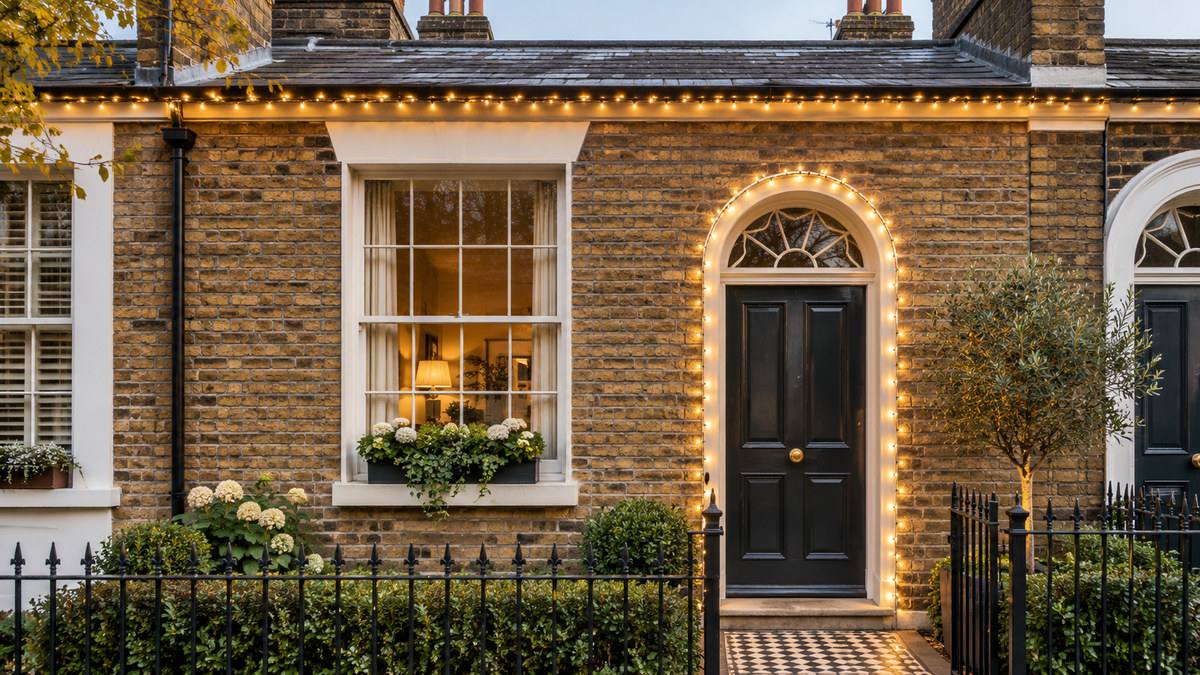
Across the lights we priced for a front door and railings, every one was IP44. That fits a door surround or a railing, which is a front that sees weather but is not under a constant stream of water.
Choosing between IP44 and IP65 and reading the label
Start with where the lights will hang. A door garland under a deep hood and a line along an open gutter do not meet the same weather. If a run will take direct spray, ask whether a higher rating is offered for that product.
Next, look at the plug end. If the lights are IP65 and the plug is IP44 when protected, the plug is the part to think about. Ask where it will sit and how it is kept out of direct weather.
Check what is included. A timer matters for a front display that you want on and off without going outside. On the Plus plug we priced, no timer was stated, so a timer would be a separate item.
Before you buy, look for the IP code on the lights, on the plug and on any extension cable. Look for the voltage on the transformer or driver. Look for any wording about the plug needing protection.
Outdoor lights and sockets should be rated for outdoor use. If you are unsure about your outdoor electrics, ask a registered electrician.
This post is about reading product labels. It is not wiring advice, and a blog post should not be treated as that.
Our own lights and how to ask
Our own lights are outdoor-rated, low-voltage LED on a timer. That is our stock, and it is separate from the shop products above. You can see the public packages and what each covers on our Christmas light installation page.
If you want a quote, a clear photo helps. Our note on photos for a Christmas lights quote explains what to send.
To ask, send a photo of the front of the house and the postcode on WhatsApp: 07782 212334.